The short version
- Choose direction → Practice a task → Show the evidence.
- Keep source evidence and review the result before using it.
An AI career roadmap should connect a role's tasks to work you can demonstrate. Begin with the kind of output you want to produce: a tested feature, a reviewed answer, an annotated dataset, a research summary, or a documented process. Then choose the learning and practice that support it.
You do not need to study every part of AI before making a useful work sample. You do need to understand the limits of the task you choose and explain how you checked your result.
Choose a task family
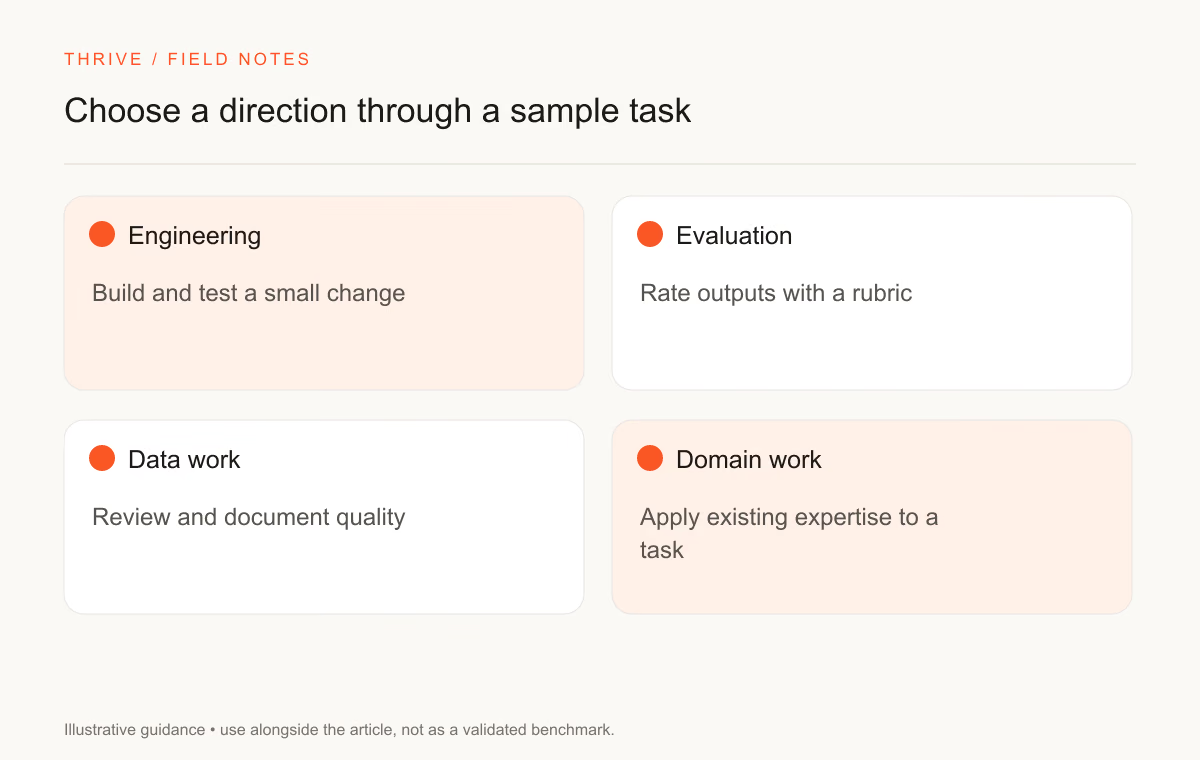
Starting experience | Task family to investigate | A first practice output |
|---|---|---|
Writing or subject expertise | Evaluation and domain training | A source-backed answer comparison |
Software development | AI engineering and coding assistance | A small feature with tests and a review log |
Operations or project coordination | Workflow design and review | A documented process with exception handling |
Research or analytics | Evidence review and data work | A reproducible analysis with source notes |
Teaching or instructional work | Explanation review and learning content | A worked example checked against a rubric |
These are starting points for investigation. A specific role may require qualifications or experience outside the table. Use actual postings to choose what to learn next.
Read three real job descriptions before choosing a course
Collect three postings you would consider applying to, using employer sites to verify them. Record the required tasks, tools, qualifications, location rules, and expected outputs. Keep the date you checked each posting.
Distinguish a required skill from a preferred one. If the roles ask for SQL, learn enough to produce and check a relevant query. If they ask for review judgment, build an evaluation sample. A generic course list cannot make that choice for you.
The AI skills guide can help translate broad terms into evidence. Browse AI opportunities when relevant listings are available, and verify the employer's current application page.
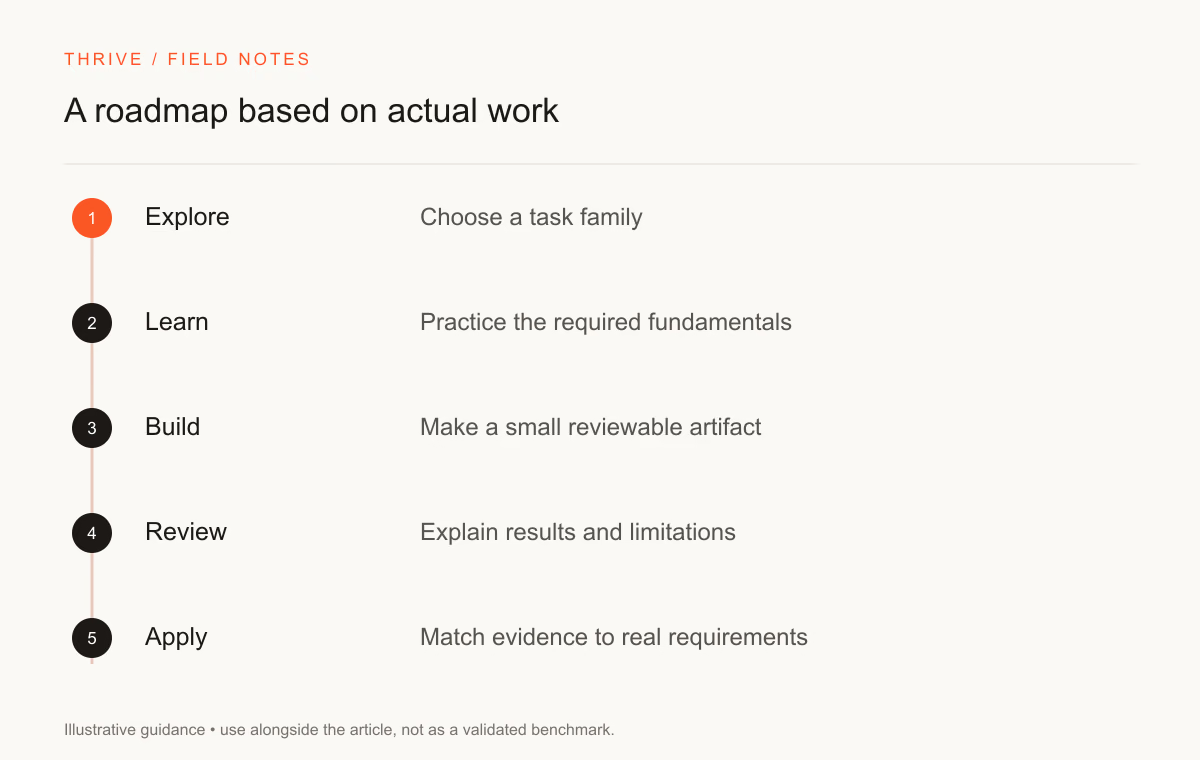
Use this six-stage plan at your own pace
The schedule below is an original planning template. You can use one stage per week if your available time permits, or spend several weeks on a stage. It is not a hiring timeline or a promise that six weeks is enough for a new career.
Stage | Work to do | Output to keep | Review before moving on |
|---|---|---|---|
1. Pick a target | Compare three verified postings | A task and requirements matrix | Can you explain the role's main output? |
2. Learn the essentials | Study the terms and tools needed for one task | Notes and a small worked example | Can you check the example without relying on fluent prose? |
3. Run a practice task | Complete a narrow project with public or invented inputs | Input, instructions, and output | Does it meet your written acceptance rule? |
4. Find a failure | Test missing data, ambiguity, or an edge case | A failure log and one revision | Can another person reproduce the issue? |
5. Prepare evidence | Explain the project and your contribution | A short portfolio page and resume draft | Are all claims supported by your work? |
6. Apply and adjust | Submit relevant applications and keep a record | Submitted versions and feedback notes | What should you change based on actual feedback? |
Keep the scope small. A two-page evaluation report with sources and a clear correction can be more useful than an unfinished project that tries to automate everything.
Match your project to the work you want
For evaluation, compare answers against a reference and explain each rating. Use the AI evaluation hub and the AI evaluator guide to structure the exercise.
For coding, implement a small change, run tests, inspect the diff, and document a failure. The coding model comparison proposes a test structure without claiming results we have not measured.
For operations, map a manual workflow and add an exception rule before automating a step. Read prompt engineering versus AI automation. Keep consequential actions behind explicit application permissions.
For research, distinguish a source claim from your own conclusion. Keep links, dates, and unresolved questions. A summary is easier to trust when a reader can trace its main claims to evidence.
Make the portfolio easy to inspect
Give each project a brief introduction: the task, the input, your contribution, the result, and a limitation. Include a small sample rather than a large unexplained file. Label invented examples and remove confidential information.
Describe what the assistant did and what you did. If you accepted a generated draft, explain how you checked it. If a model failed, show the failure and your correction. That account gives an interviewer specific questions to ask.
Use the resume builder to prepare an application version. The resume tailoring guide explains how to select relevant evidence without adding skills you have not used.
Review your plan after actual feedback
Keep a simple application log with role, source, submission date, document version, and outcome. Review it for a concrete next action: a missing work sample, a recurring tool requirement, or a need to explain your experience more clearly.
Do not interpret a rejection as proof that a keyword or course would have fixed the application. You rarely have enough information to know the employer's decision process. Use direct feedback when you receive it and keep other explanations tentative.
The AI readiness assessment offers an exploratory role-fit result and salary estimate. Treat those outputs as suggestions to investigate, not a verified earnings forecast or an employer assessment. Your roadmap should still use actual role requirements and evidence from your work.
Sources and review notes
Thrive Editorial reviewed these sources on September 28, 2026. The roadmap is an original planning template. The World Economic Forum report concerns its 2025 research and outlook; it does not establish a current vacancy or a personal employment forecast.
Put it into practice
Your next step
Read next
Related guideAI Skills to Demonstrate for Employers in 2026Related guideGPT-6 Sol vs Claude Opus 5.5 for Coding: A Fair Comparison PlanRelated guidePrompt Engineering vs AI Automation: Tasks, Skills, and ControlsRelated guideWhat Does an AI Evaluator Do? Tasks, Rubrics, and a Worked ExampleHave a question or a correction?
Contact Thrive