The short version
- Existing expertise → Reviewed sample → Verified posting.
- Keep source evidence and review the result before using it.
Some AI work focuses on language, subject expertise, reviewing responses, or organizing a process. You may be able to do those tasks without writing software. The requirements still depend on the employer and project; a role with a non-engineering title can ask for SQL, scripts, or a technical degree.
Start by identifying work you already understand. A teacher may have useful experience checking explanations against a rubric. A customer support specialist may know how to document ambiguous requests. Connect that experience to the actual tasks in a posting.
Look at responsibilities rather than the title
Task family to investigate | What the work can involve | What to check in the posting |
|---|---|---|
Response evaluation | Compare answers, find errors, and explain a rating | Rubric, language level, domain tests, and technical requirements |
Domain expert training | Write questions and verify answers in a field | Required qualifications and evidence of expertise |
Data annotation | Apply labels according to project instructions | Data type, sensitive content, quality rules, and location eligibility |
Content operations | Organize reviewed drafts and maintain a publication process | Editing standards, tools, and approval responsibilities |
AI customer support | Help users understand a product and report issues | Product knowledge, support experience, and troubleshooting expectations |
Project coordination | Track tasks, reviewer decisions, and delivery issues | Documentation, communication, and required analytics skills |
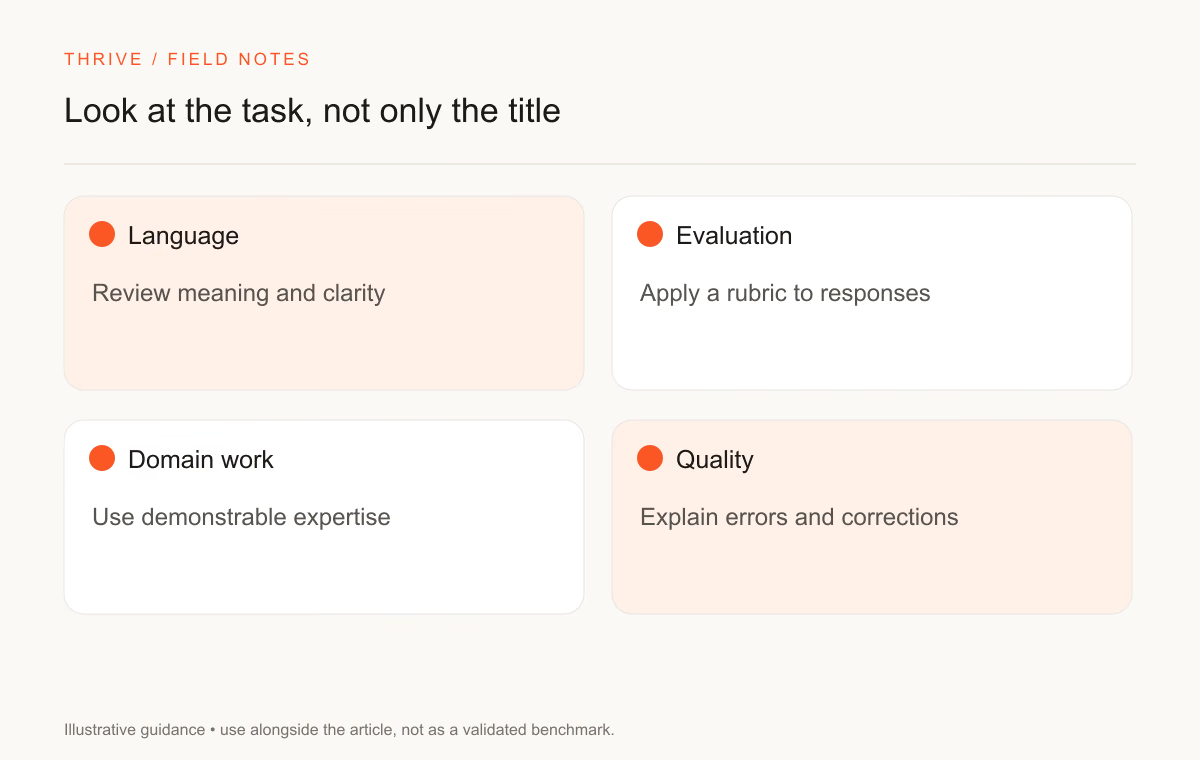
This table describes task families to research. It is not a list of open jobs, guaranteed entry-level roles, or tasks available in every country.
Read a platform's requirements carefully
Outlier's public site describes work such as writing prompts, creating rubrics, and rating answers. It also states that qualifications vary by opportunity and that minimum qualifications typically require undergraduate-level expertise. That is a useful reminder to check the specific opportunity before assuming "no coding" means "no specialist knowledge."
Some platforms describe freelance project work. Read the terms for payment, onboarding, eligibility, and project availability. Registration or a successful assessment does not establish that a steady supply of work will follow.
Build a small, reviewable sample
Choose a topic you know well and a short source you are allowed to use. Write a question, prepare a reference answer, and compare two assistant responses against it. Note factual mistakes separately from style preferences.
For a writing sample, revise a poor explanation and explain your changes. For an operations sample, document a manual review process with an escalation step. Keep the sample narrow enough that another person can inspect the evidence.
Sample | Evidence to include | Claim to avoid |
|---|---|---|
Answer comparison | Sources, rubric, ratings, and reasoning | A claim that you trained a deployed model |
Annotation exercise | Label definitions and difficult examples | A claim about commercial dataset quality |
Editing exercise | Original text, revision, and explanation | An invented engagement improvement |
Review workflow | Steps, exceptions, and a sample record | A claim that the process ran in production |
Use the AI evaluation skills hub for practice workflows. Name a sample as a practice project on your resume. It can demonstrate judgment without pretending to be employment.
Learn the technical vocabulary of your chosen task
You do not have to start with a programming course for every role. You should understand the words used in the work you want: rubric, reference answer, hallucination, escalation, or data privacy, for example.
Read a product's documentation and follow a task from input to reviewed output. If a posting requires spreadsheets, SQL, or a scripting language, treat that as a concrete gap to investigate. Do not claim a skill after only reading its definition.
The prompt engineering guide can help you practice clear instructions. The AI evaluator guide explains what a rating exercise should document.
Check eligibility and avoid payment traps
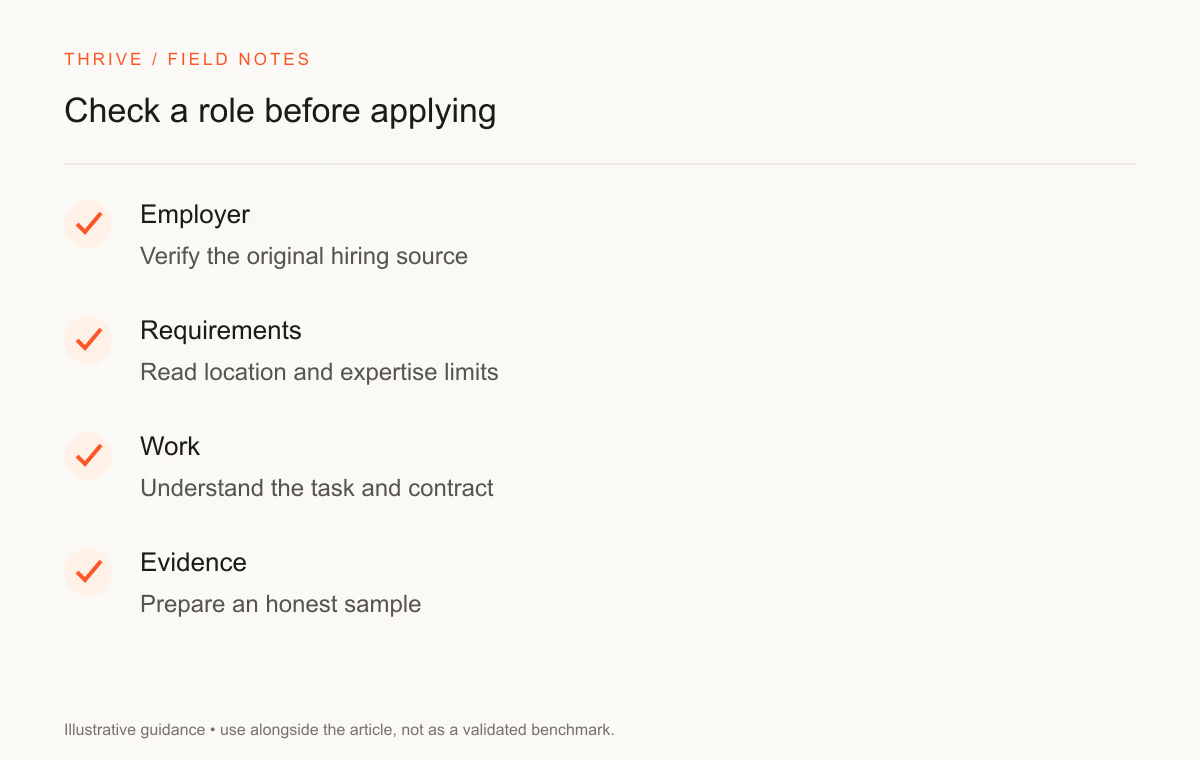
Use the employer's own application page to verify a vacancy. Check where the role accepts applicants, how the engagement is classified, and whether required work hours fit your circumstances. A "remote" label alone does not answer those questions.
The FTC's job scam guidance describes requests for payment and fake-check schemes among common warning signs. Do not send money to obtain a promised job. Verify who is contacting you before sharing identity or financial information.
Prepare an application around one task
Select a real posting and underline its required outputs. Choose two examples from your experience or practice work that match those outputs. In the resume builder, describe what you did, how you checked it, and the tools you actually used.
Use the AI career roadmap to plan your next sample. Browse AI opportunities when relevant listings are available. Keep looking beyond a single platform, and record the requirements that recur in the roles you find.
Sources and review notes
Thrive Editorial reviewed these sources on September 28, 2026. Examples are suggested practice exercises. We have not verified an available vacancy, earnings rate, or hiring outcome for the task families above.
Put it into practice
Your next step
Have a question or a correction?
Contact Thrive