The short version
- Role requirement → Practice output → Review record.
- Keep source evidence and review the result before using it.
Build AI skills around the tasks an employer needs you to perform. Read the role's responsibilities, choose a matching practice task, and produce evidence you can explain. Familiarity with a model name gives you a starting point, while a tested output shows how you apply it.
This guide provides a skill-to-evidence framework. It does not rank skills by live job-posting frequency. Thrive's workflow catalog supplies instructions; it does not measure what employers demand or certify personal proficiency.
Use broad research as context
The World Economic Forum's Future of Jobs Report 2025 collects employer perspectives on jobs and skills through 2030. Its timeframe and survey scope differ from an individual vacancy. Use it for context, then inspect the actual postings relevant to your role and country.
Occupational references such as O*NET's data scientist profile describe work at a broader level. They cannot tell you whether a particular employer requires a specific tool or qualification.
Connect each skill to a reviewable output
Capability | A practice output | Review question | Thrive workflow |
|---|---|---|---|
Prompt design | A prompt with examples and tests | Does it preserve the task's constraints? | |
Model evaluation | A rubric and rated responses | Can a reviewer trace the rating to evidence? | |
Data quality | A cleaning report | Do the checks match the dataset's intended use? | |
SQL | Queries and result checks | Are joins and aggregates correct? | |
Debugging | A reproduction and tested fix | Does the patch address the cause? | |
Source verification | Claims with supporting passages | Does the source support the stated conclusion? |
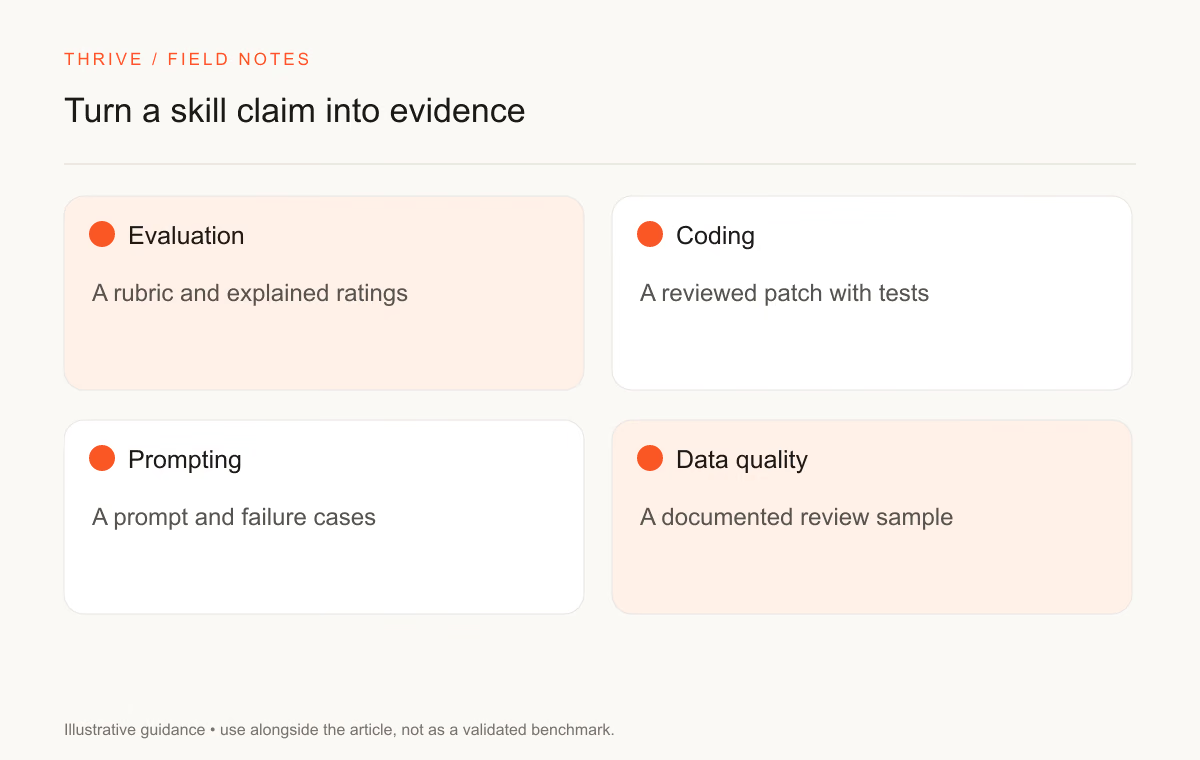
The table gives editorial practice suggestions, not a demand ranking or a progression of earned levels. A role may require several capabilities at once and define them differently.
Build prompt literacy through evaluation
Practice stating the task, audience, inputs, output format, and failure conditions. Add examples where the instruction could be ambiguous. Compare the output with the rule you intended to communicate.
Keep the prompt and the test cases together. A change that improves one answer may damage another. Re-run the important examples after each revision and record why you kept the change.
Use the prompt improvement audit to review the instructions. The prompt engineering guide shows how to move from a first draft to a repeatable test.
Show judgment in evaluation work
An evaluator needs to distinguish supported claims from plausible language. Practice citing the passage that changes your rating and identifying a case where you need more evidence.
Preserve disagreement between reviewers. Investigate whether the task definition, rubric, or source material caused it. A forced agreement can conceal a rule that needs clarification.
The pairwise rubric prompt offers a structure for that exercise. Keep the task and reviewer notes with the result.
Match technical depth to the role
Some roles require software development and maintenance. Others center on research, quality review, domain knowledge, or coordination. Confirm the requirement instead of treating “AI” as a single technical level.
For a code project, include behavior checks and permission boundaries. For a data project, document sources and cleaning decisions. For operations, name the owner of each step and the condition that requires escalation.
Choose a project small enough to finish and review. A bounded artifact with evidence can reveal more about your decisions than an unfinished demonstration with many tools.
Describe your skills with evidence
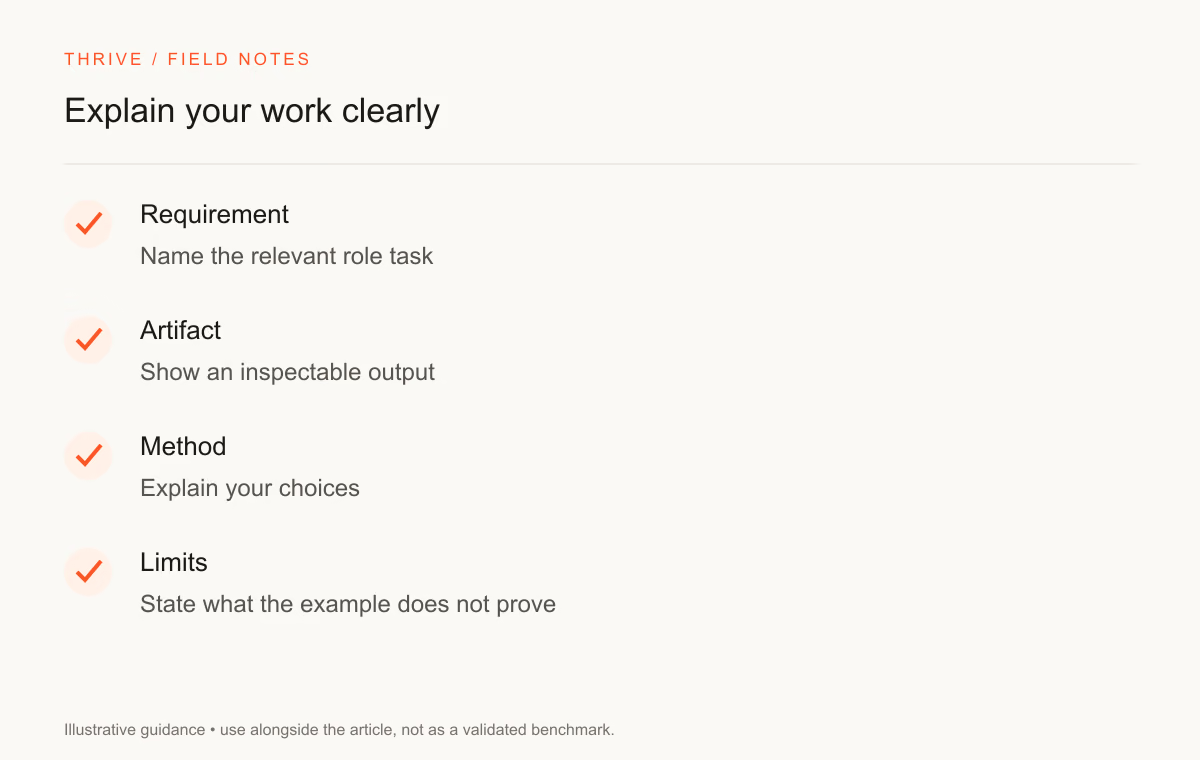
Write a sentence about a task you completed, the method you used, and the output you checked. Name a tool where it matters. Keep assistant contributions distinct from your decisions.
Describe independent practice as a project. Downloading a workflow called “Senior Prompt Engineer” does not establish seniority. The skills index explains Thrive's catalog classification and limits.
Use the resume builder to present relevant examples. The AI career roadmap helps you choose a next practice task based on the role you want.
Sources and review notes
Thrive Editorial reviewed these sources on September 28, 2026. We have not measured a 2026 employer demand ranking or salary premium for the capabilities listed here.
Put it into practice
Your next step
Have a question or a correction?
Contact Thrive