
The short version
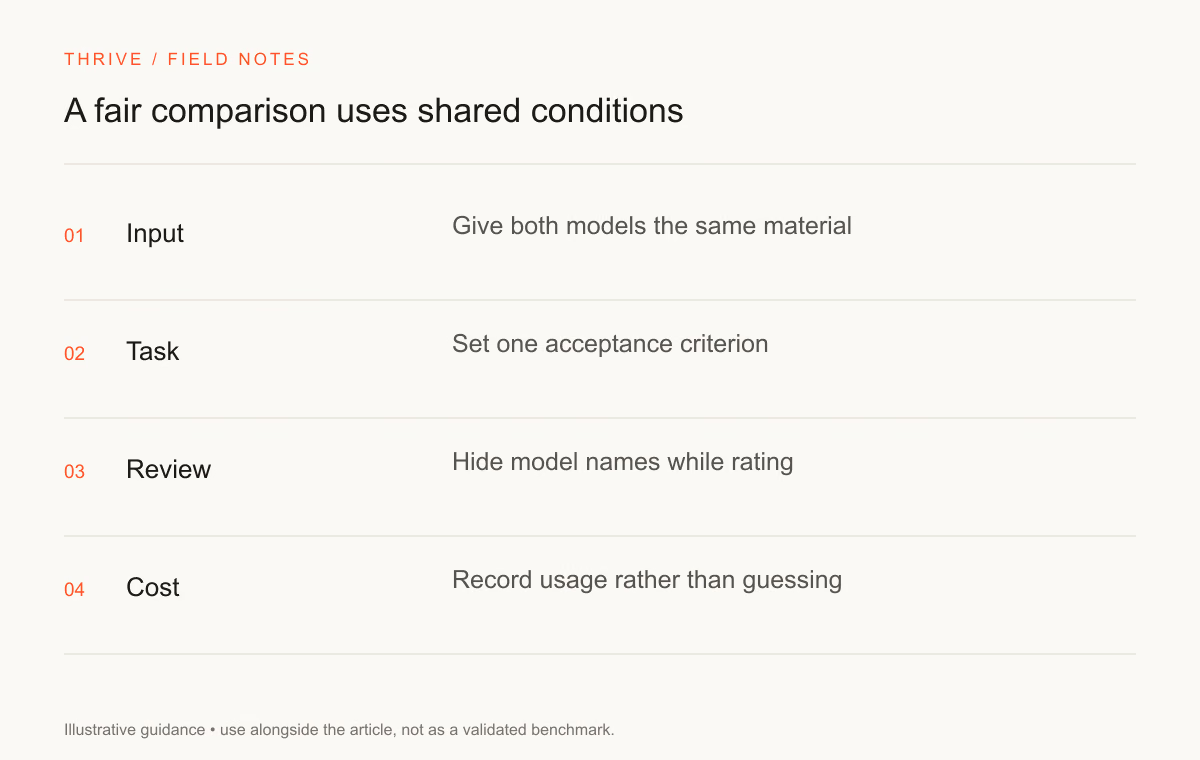
- Same input → Blind review → Measured cost.
- Keep source evidence and review the result before using it.
Claude Opus 5.5 and GPT-6 Sol can both support coding and knowledge work. Choose between them by testing the tasks you intend to hand over, with the same inputs and review rules. Their specification sheets tell you the access limits and token prices; they do not settle which model will handle your project better.
Thrive reviewed the official documentation on September 28, 2026. This is a specification comparison and evaluation guide. We have not run a head-to-head benchmark, so the tables contain no invented performance scores.
Compare the published API specifications
Item | GPT-6 Sol | Claude Opus 5.5 |
|---|---|---|
Provider | OpenAI | Anthropic |
API model ID | gpt-6-sol | claude-opus-5-5 |
Context window | 1,050,000 tokens | 1,000,000 tokens |
Maximum output | 128,000 tokens | 128,000 tokens |
Base input rate per million tokens | USD 2 | USD 4 |
Base output rate per million tokens | USD 10 | USD 20 |
Sources: OpenAI's Sol specification, Anthropic's model overview, and Anthropic's API pricing. These base rates exclude tool charges, caching, service tiers, regional pricing, and other conditions. OpenAI applies higher rates to requests above its documented long-input threshold. Verify the billable conditions for your workload before budgeting.
An API rate is separate from a consumer subscription. A ChatGPT or Claude plan does not give you unrestricted API usage at the rates in this table. Check the product and account you will use.
Measure the cost of a completed task
A token-price comparison helps with an initial estimate. Your actual task cost also includes retries and the time you spend reviewing the output.
For an illustrative request with 10,000 uncached input tokens and 2,000 output tokens, the base text charges would be USD 0.04 for Sol and USD 0.08 for Opus 5.5. The arithmetic uses the table's rates and assumes neither provider applies an additional charge. These are calculated examples, not observed bills or a forecast of how much text either model will produce.
Keep the provider's usage response for each test. Two tokenizers can count the same document differently. A model that produces a longer answer may cost more than your fixed-output example suggests.
Test the work you will ask it to do
Workload | Supply both models | Review the output for |
|---|---|---|
Code change | The same repository snapshot and failing test | Correct behavior, minimal changes, passing checks |
Research summary | The same source pack and question | Supported claims and accurate citations |
Resume editing | The same verified facts and job description | Preserved facts and useful cuts |
Long-document review | The same document and questions | Evidence from relevant sections and acknowledged gaps |
Agent workflow | The same tools and permission boundary | Safe actions, recovery, and a usable audit trail |
Set your acceptance rules before reading the answers. For a resume task, added facts should fail the review even if the paragraph sounds persuasive. For a code task, a confident explanation does not replace a passing test.
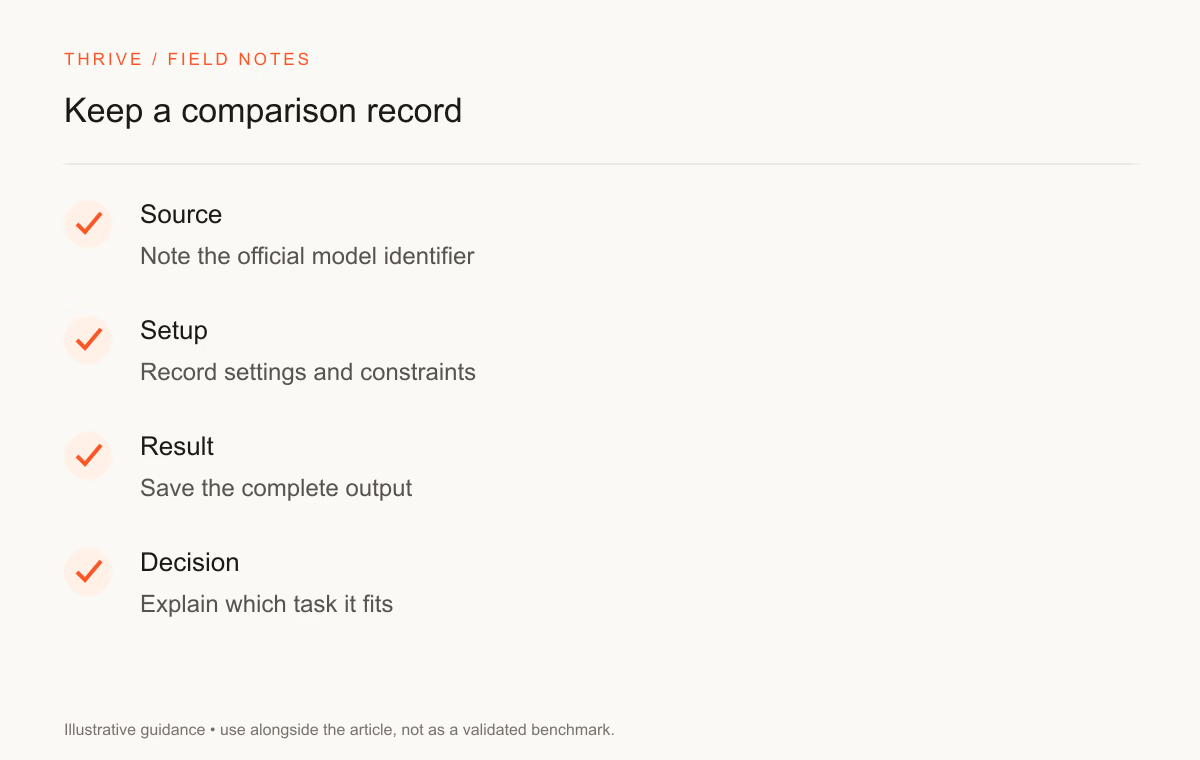
Use the pairwise evaluation prompt to structure an initial comparison. Hide model labels from the reviewer where possible, and preserve ties. Record settings and tool access beside the result.
Keep product features separate from model behavior
A web app may supply search, file retrieval, connectors, and document export around a model. If you compare the apps, those features belong in the evaluation. If you compare the models, hold the surrounding tools constant.
For research, check whether the assistant opened the source and whether the cited passage supports its claim. For a job application, confirm the employer and current posting yourself. Neither model should invent qualifications or send an application without your review.
The Claude versus ChatGPT work guide covers product-level choices. The coding comparison offers a narrower test plan for repositories.
Choose a model after a small pilot
Pick representative tasks, including a case you expect to fail. Compare acceptance rate, review effort, and actual usage cost. Re-run the important cases after a model or tool update. A small pilot gives you local evidence; it does not establish a universal winner.
Save the prompt, source material, model ID, date, and reviewer notes. You can use the model evaluation skill to organize that record, then turn a de-identified version into portfolio evidence.
Sources and update policy
Thrive will update this URL when a verified specification changes. Prices and availability require a fresh check before you purchase or migrate.
Put it into practice
Your next step
Have a question or a correction?
Contact Thrive