
The short version
- Read announcement → Separate unknowns → Prepare tests.
- Keep source evidence and review the result before using it.
Anthropic has announced that Claude Sonnet 5.5 will follow Opus 5.5 in the coming weeks. As of September 28, 2026, the official pages reviewed for this article do not provide a confirmed Sonnet 5.5 launch date, pricing table, or complete specification.
Use this page as a dated status check. Keep using verified information for the model available in your account while you prepare an evaluation for a future release.
Separate confirmed details from missing information
Question | Status on September 28, 2026 | Source or next check |
|---|---|---|
Has Anthropic mentioned Sonnet 5.5? | Yes, in the Opus 5.5 announcement | Anthropic launch article |
Is there a confirmed launch day in that announcement? | No; it says the coming weeks | Watch the official release notice |
Are Sonnet 5.5 API prices verified here? | No | Check official pricing after release |
Are context and output limits verified here? | No | Check the model specification |
Has Thrive tested Sonnet 5.5? | No | No benchmark results to report |
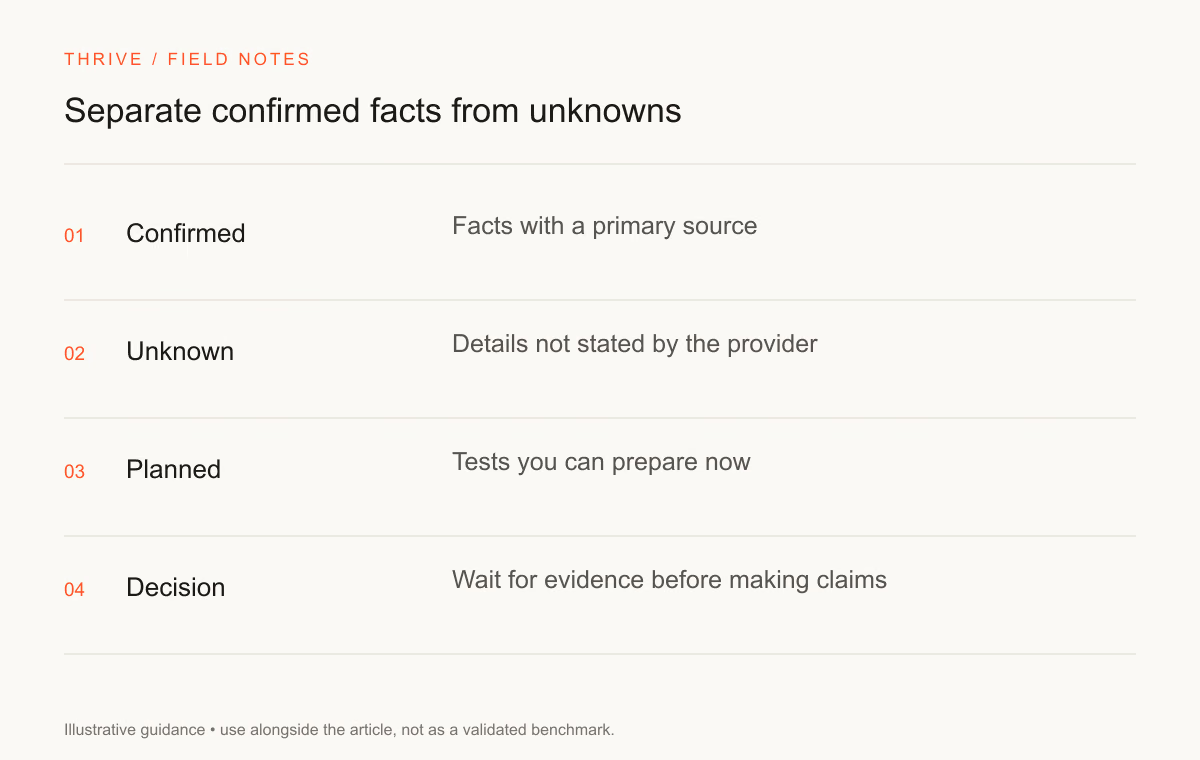
The Opus 5.5 announcement supplies the forward-looking statement. The current model overview lists Sonnet 5. Do not transfer Sonnet 5's specifications to a future version.
Keep speculation out of a migration decision
A rumor about a price or benchmark can affect a purchase if you treat it as a specification. Wait for an official model page and verify account access. A launch announcement can still leave limits or regional conditions for the product documentation to explain.
Record the source URL and the date beside any detail you use. If a source changes, revisit the decision rather than keeping a screenshot as proof of a current rate. The same discipline applies to release dates shared in forums or comparison tables.
You can continue a pilot with the available model and preserve the inputs for a later comparison. That gives you a baseline without pretending to test a product you cannot access.
Prepare a release-day evaluation
Choose a small set of tasks before reading launch benchmarks. Include a normal case, a difficult case, and a case with missing evidence. Decide what the output must do and which actions require human review.
For a writing workflow, preserve the factual source notes. For coding, preserve the repository commit and test command. For research, keep the original documents and a record of questions whose answers are absent.
Work you plan to test | Save now | Record after access |
|---|---|---|
Code change | Starting commit and acceptance tests | Model ID, diff, command log, outcome |
Document review | Source pack and expected evidence | Citations and unsupported claims |
Resume edit | Verified experience notes | Changes accepted and facts corrected |
Workflow execution | Tools and permission rules | Actions taken and review checkpoints |
The model evaluation skill and pairwise prompt provide a structure you can adapt. Record settings and tools so a future comparison remains interpretable.
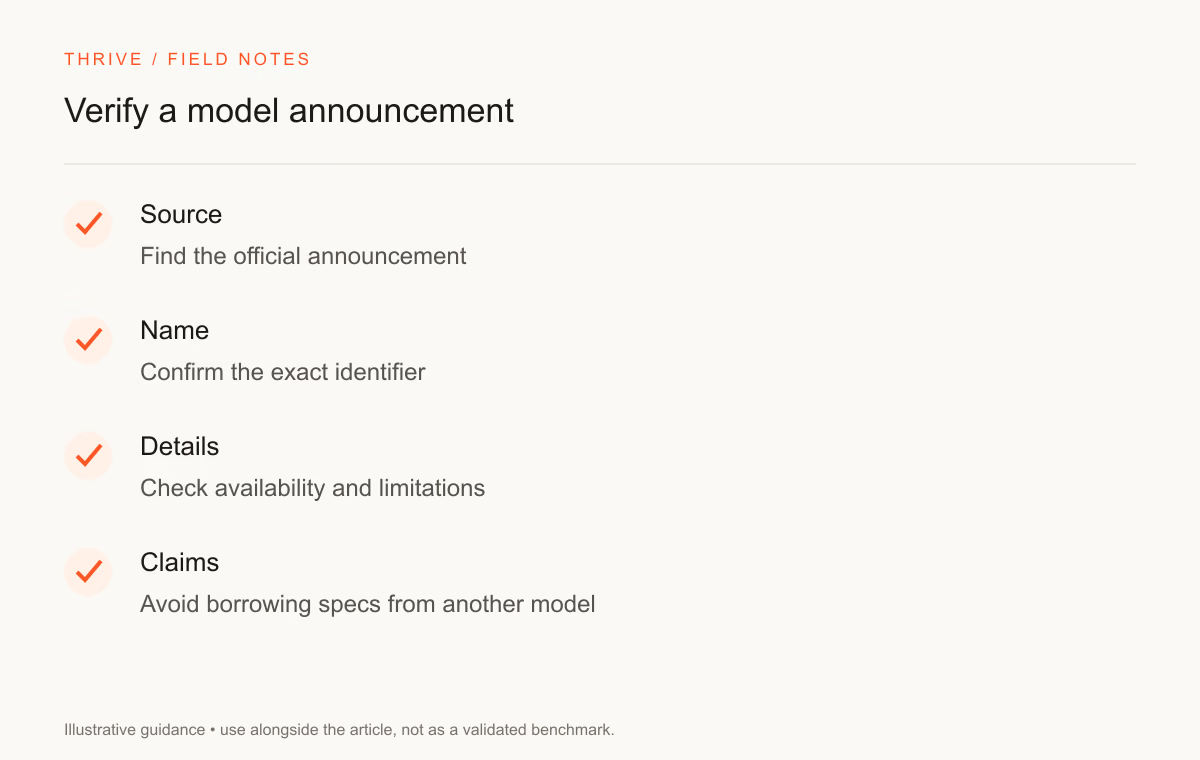
Review the announcement before changing your workflow
After release, check the official model ID, capabilities, limits, prices, and product availability. Then run the preserved task set. Review failures and successful outputs under the same rules you used for the baseline.
A product feature may arrive on a different schedule from API access. Confirm which account you use. Keep an existing working setup available while you evaluate a replacement.
For current options, read the Opus 5.5 guide and Claude versus ChatGPT product comparison. Use the prompt audit to check whether a poor result comes from unclear instructions before blaming or replacing the model.
Sources and update policy
Thrive Editorial reviewed these sources on September 28, 2026. We will update this URL after a verified release rather than create a duplicate launch article. Unknown details remain unknown until a supporting source becomes available.
Put it into practice
Your next step
Have a question or a correction?
Contact Thrive