
The short version
- Define the task → Evaluate routes → Track failures.
- Keep source evidence and review the result before using it.
GPT-6 Sol, Luna, and Astra give you different options for task complexity and cost. OpenAI positions Astra for its most demanding work, Sol for coding and agentic workflows, and Luna for focused high-volume tasks. Start with a task you can evaluate, then decide which model meets your acceptance rules at an acceptable cost.
The specifications below reflect official OpenAI documentation reviewed on September 28, 2026. This guide does not report a Thrive benchmark or promise that a model will perform better on your particular workload.
Compare the published specifications
Item | GPT-6 Luna | GPT-6 Sol | GPT-6 Astra |
|---|---|---|---|
API model ID | gpt-6-luna | gpt-6-sol | gpt-6-astra |
Base input per million tokens | USD 0.10 | USD 2 | USD 10 |
Base output per million tokens | USD 0.50 | USD 10 | USD 50 |
Context window | 1,050,000 tokens | 1,050,000 tokens | 1,050,000 tokens |
Maximum output | 128,000 tokens | 128,000 tokens | 128,000 tokens |
Sources: the official pages for Luna, Sol, and Astra. The table uses base text rates. Verify caching, long-input conditions, service tiers, regional processing, and tool charges before calculating a bill.
A large context window sets a capacity limit. It does not establish that a model will use all the supplied material well. Test whether it finds and applies the evidence relevant to your question.
Route by the task's acceptance rules
Example task | Candidate to try first | Evidence needed before keeping it |
|---|---|---|
Extract fields from a short document | Luna | Valid fields, supported values, correct handling of missing data |
Implement a scoped repository change | Sol | Passing tests and a reviewable diff |
Investigate several interacting constraints | Astra | A supported explanation and checks for the important cases |
Rewrite a resume bullet | A bounded trial across available models | Preserved facts and useful wording |
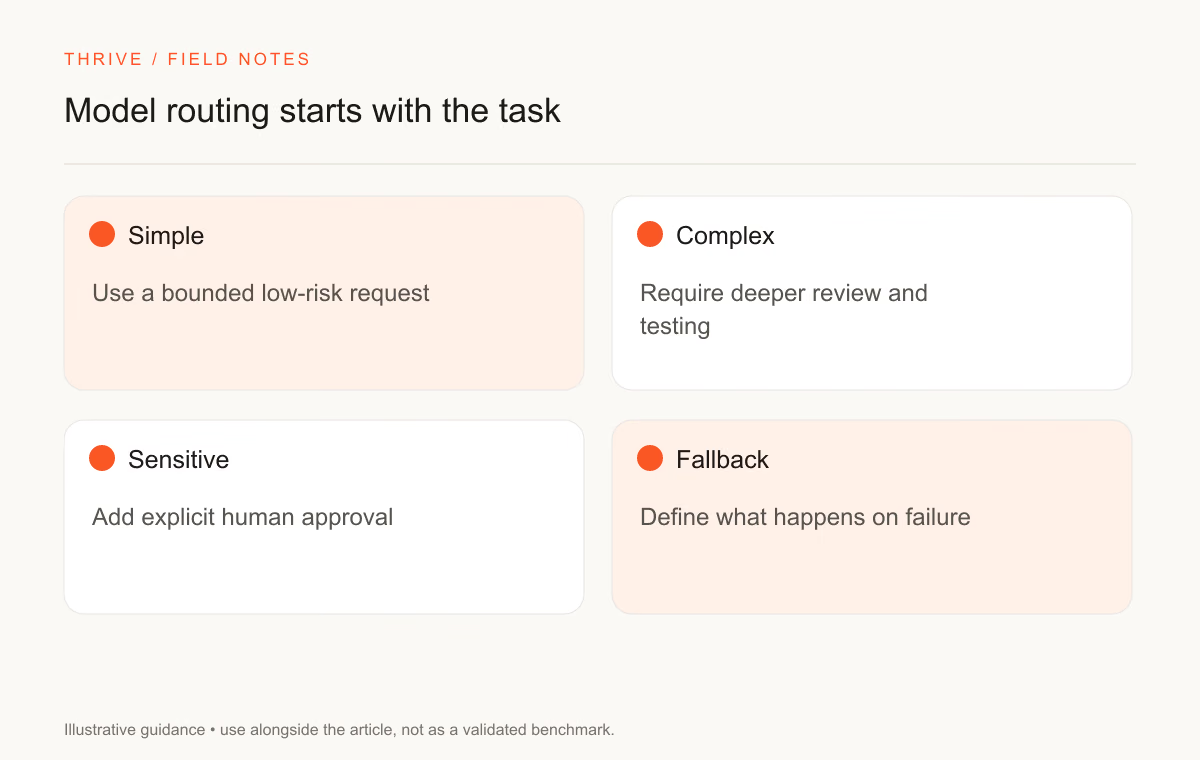
These are proposed trial routes, not measured rankings. Your evaluation may lead to a different choice. A sensitive extraction task can deserve more review than a large but low-risk writing task.
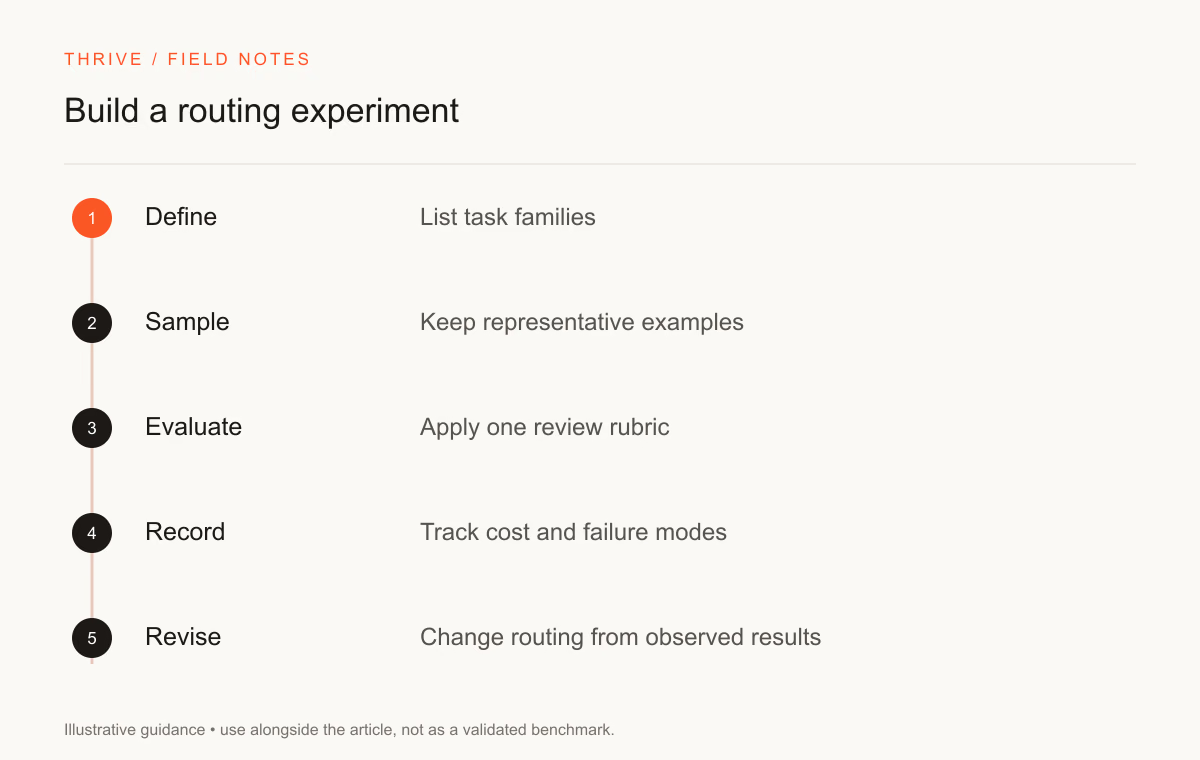
Keep a set of examples with known acceptable outputs. Include missing fields, conflicting instructions, and inputs outside the normal range. Record an abstention or escalation as acceptable where the evidence does not support an answer.
Calculate an illustrative base charge
For 10,000 uncached input tokens and 2,000 output tokens, the table's base rates produce USD 0.002 for Luna, USD 0.04 for Sol, and USD 0.20 for Astra. These are arithmetic examples with fixed token counts, not observed usage or a forecast of a model's response length.
Add the charges that apply to your request. Count retries and failed attempts. Compare total cost per accepted task after review, rather than assuming the lowest token rate gives you the lowest completed-work cost.
For a consumer or coding-agent subscription, use the product's plan conditions instead. API pricing and subscription allowances describe different billing arrangements.
Build an escalation rule before production
Define the conditions that require a stronger model or human review. You might escalate a document with conflicting source values, a code change that fails a regression test, or an output that lacks required citations.
Keep the original input and failure reason with the escalated task. A second model needs the evidence that caused the problem. Asking for a more confident answer can hide uncertainty without resolving it.
Use the model evaluation workflow to define success, and the output-error audit prompt to classify failures. Check the smaller model again on a held-out set before expanding its workload.
Keep the evaluation stable across updates
Record the model ID, date, settings, input, tools, output, and reviewer decision. Re-run representative cases when a provider changes behavior or you change the surrounding application. A result from one configuration does not establish performance in another.
For coding, read the AI coding selection guide. For a cross-provider decision, use the Opus 5.5 versus Sol comparison.
You can turn a de-identified routing experiment into a portfolio project. Explain the acceptance rules, observed failures, and review decisions, then describe your contribution in the resume builder.
Sources and update notes
Thrive Editorial reviewed these sources on September 28, 2026. Recheck prices and account access before committing to a workload.
Put it into practice
Your next step
Have a question or a correction?
Contact Thrive