Versão breve
- A IA do Figma pode ajudar nos primeiros rascunhos e em alterações de frames selecionados. Estes prompts descrevem direções de layout editáveis; confirme o acesso atual às funcionalidades no seu espaço de trabalho.
- Os ecrãs gerados são pontos de partida. Teste-os com conteúdo real, teclado, ecrãs pequenos e as pessoas que os vão utilizar. O acabamento visual não comprova a usabilidade.
A IA do Figma pode ajudar nos primeiros rascunhos e em alterações de frames selecionados. Estes prompts descrevem direções de layout editáveis; confirme o acesso atual às funcionalidades no seu espaço de trabalho.
Os ecrãs gerados são pontos de partida. Teste-os com conteúdo real, teclado, ecrãs pequenos e as pessoas que os vão utilizar. O acabamento visual não comprova a usabilidade.
Como utilizar esta coleção
Escolha a tarefa mais próxima do seu trabalho. Copie o prompt, substitua a cena genérica ou o contexto de código pelos seus dados e mantenha as restrições que ajudam a avaliar o resultado. Altere uma variável de cada vez para identificar o que melhorou.
A abordagem segue o Guia do Figma First Draft: forneça contexto concreto e examine o resultado sem assumir que um primeiro rascunho bem apresentado está correto.
Prompts para descrever a tarefa
Para descrever a tarefa, identifique o utilizador e a decisão que o ecrã deve apoiar.
1. Um ecrã de pagamento móvel
Design a mobile checkout screen for a person who needs to finish one task quickly. State the audience and task you are assuming. Then show the user goal, entry point, essential action and success state in a low-fidelity flow. Use realistic labels and content lengths, with no invented metrics or testimonials. Describe the information hierarchy, mobile adaptation and next action. Explain one tradeoff and how you would check it with users.Verificação: Um novo utilizador consegue identificar a ação seguinte sem ler uma indicação adicional?
2. Um conjunto de variantes de componentes
Design a component variant set for a person who needs to finish one task quickly. State the audience and task you are assuming. Then show the user goal, entry point, essential action and success state in a low-fidelity flow. Use realistic labels and content lengths, with no invented metrics or testimonials. Describe the information hierarchy, mobile adaptation and next action. Explain one tradeoff and how you would check it with users.Verificação: Um novo utilizador consegue identificar a ação seguinte sem ler uma indicação adicional?
3. Um sistema de cartões para um painel
Design a dashboard card system for a person who needs to finish one task quickly. State the audience and task you are assuming. Then show the user goal, entry point, essential action and success state in a low-fidelity flow. Use realistic labels and content lengths, with no invented metrics or testimonials. Describe the information hierarchy, mobile adaptation and next action. Explain one tradeoff and how you would check it with users.Verificação: Um novo utilizador consegue identificar a ação seguinte sem ler uma indicação adicional?
4. Uma navegação de definições
Design a settings navigation for a person who needs to finish one task quickly. State the audience and task you are assuming. Then show the user goal, entry point, essential action and success state in a low-fidelity flow. Use realistic labels and content lengths, with no invented metrics or testimonials. Describe the information hierarchy, mobile adaptation and next action. Explain one tradeoff and how you would check it with users.Verificação: Um novo utilizador consegue identificar a ação seguinte sem ler uma indicação adicional?
5. Uma secção de preços responsiva
Design a responsive pricing section for a person who needs to finish one task quickly. State the audience and task you are assuming. Then show the user goal, entry point, essential action and success state in a low-fidelity flow. Use realistic labels and content lengths, with no invented metrics or testimonials. Describe the information hierarchy, mobile adaptation and next action. Explain one tradeoff and how you would check it with users.Verificação: Um novo utilizador consegue identificar a ação seguinte sem ler uma indicação adicional?
6. Um formulário de integração inicial
Design an onboarding form for a person who needs to finish one task quickly. State the audience and task you are assuming. Then show the user goal, entry point, essential action and success state in a low-fidelity flow. Use realistic labels and content lengths, with no invented metrics or testimonials. Describe the information hierarchy, mobile adaptation and next action. Explain one tradeoff and how you would check it with users.Verificação: Um novo utilizador consegue identificar a ação seguinte sem ler uma indicação adicional?
7. Um painel de filtros de pesquisa
Design a search filter panel for a person who needs to finish one task quickly. State the audience and task you are assuming. Then show the user goal, entry point, essential action and success state in a low-fidelity flow. Use realistic labels and content lengths, with no invented metrics or testimonials. Describe the information hierarchy, mobile adaptation and next action. Explain one tradeoff and how you would check it with users.Verificação: Um novo utilizador consegue identificar a ação seguinte sem ler uma indicação adicional?
8. Um estado vazio
Design an empty state for a person who needs to finish one task quickly. State the audience and task you are assuming. Then show the user goal, entry point, essential action and success state in a low-fidelity flow. Use realistic labels and content lengths, with no invented metrics or testimonials. Describe the information hierarchy, mobile adaptation and next action. Explain one tradeoff and how you would check it with users.Verificação: Um novo utilizador consegue identificar a ação seguinte sem ler uma indicação adicional?
9. Um cabeçalho de perfil
Design a profile header for a person who needs to finish one task quickly. State the audience and task you are assuming. Then show the user goal, entry point, essential action and success state in a low-fidelity flow. Use realistic labels and content lengths, with no invented metrics or testimonials. Describe the information hierarchy, mobile adaptation and next action. Explain one tradeoff and how you would check it with users.Verificação: Um novo utilizador consegue identificar a ação seguinte sem ler uma indicação adicional?
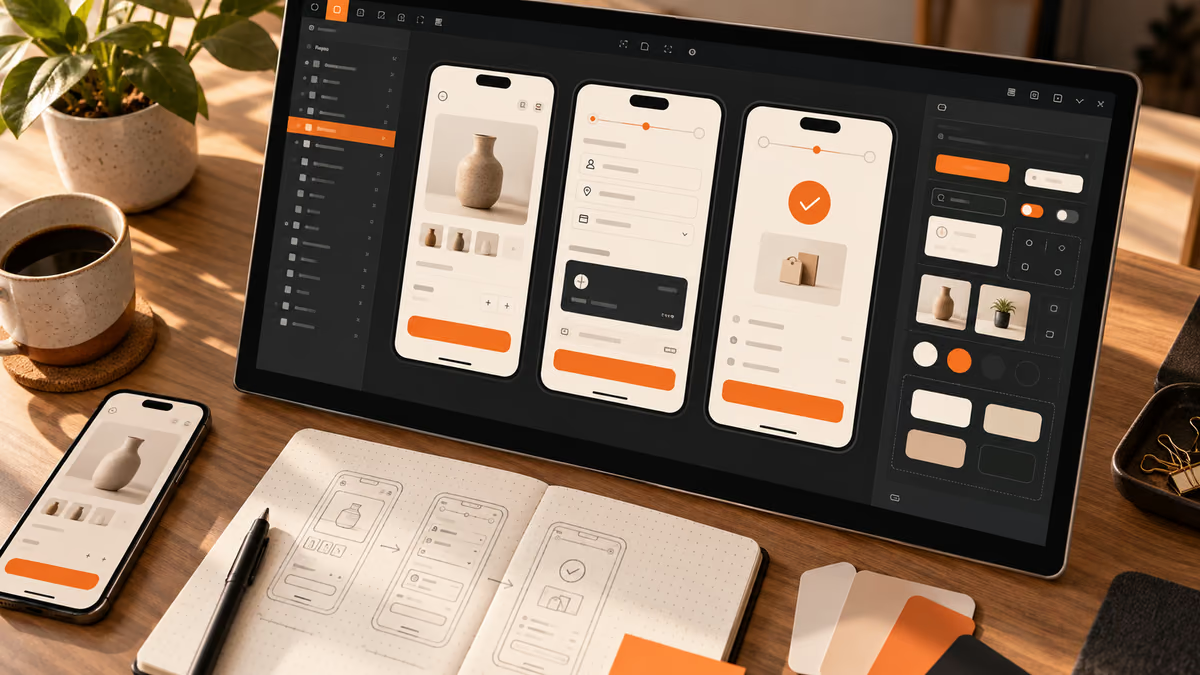
10. Uma auditoria de tokens de design
Design a design token audit for a person who needs to finish one task quickly. State the audience and task you are assuming. Then show the user goal, entry point, essential action and success state in a low-fidelity flow. Use realistic labels and content lengths, with no invented metrics or testimonials. Describe the information hierarchy, mobile adaptation and next action. Explain one tradeoff and how you would check it with users.Verificação: Um novo utilizador consegue identificar a ação seguinte sem ler uma indicação adicional?
Prompts para desenhar o ecrã principal
Para desenhar o ecrã principal, identifique o utilizador e a decisão que o ecrã deve apoiar.
11. Um ecrã de pagamento móvel
Design a mobile checkout screen for a person who needs to finish one task quickly. State the audience and task you are assuming. Then use a clear hierarchy, realistic content lengths and one prominent primary action. Use realistic labels and content lengths, with no invented metrics or testimonials. Describe the information hierarchy, mobile adaptation and next action. Explain one tradeoff and how you would check it with users.Verificação: Verifique o layout no computador e num ecrã móvel com 360 píxeis de largura.
12. Um conjunto de variantes de componentes
Design a component variant set for a person who needs to finish one task quickly. State the audience and task you are assuming. Then use a clear hierarchy, realistic content lengths and one prominent primary action. Use realistic labels and content lengths, with no invented metrics or testimonials. Describe the information hierarchy, mobile adaptation and next action. Explain one tradeoff and how you would check it with users.Verificação: Verifique o layout no computador e num ecrã móvel com 360 píxeis de largura.
13. Um sistema de cartões para um painel
Design a dashboard card system for a person who needs to finish one task quickly. State the audience and task you are assuming. Then use a clear hierarchy, realistic content lengths and one prominent primary action. Use realistic labels and content lengths, with no invented metrics or testimonials. Describe the information hierarchy, mobile adaptation and next action. Explain one tradeoff and how you would check it with users.Verificação: Verifique o layout no computador e num ecrã móvel com 360 píxeis de largura.
14. Uma navegação de definições
Design a settings navigation for a person who needs to finish one task quickly. State the audience and task you are assuming. Then use a clear hierarchy, realistic content lengths and one prominent primary action. Use realistic labels and content lengths, with no invented metrics or testimonials. Describe the information hierarchy, mobile adaptation and next action. Explain one tradeoff and how you would check it with users.Verificação: Verifique o layout no computador e num ecrã móvel com 360 píxeis de largura.
15. Uma secção de preços responsiva
Design a responsive pricing section for a person who needs to finish one task quickly. State the audience and task you are assuming. Then use a clear hierarchy, realistic content lengths and one prominent primary action. Use realistic labels and content lengths, with no invented metrics or testimonials. Describe the information hierarchy, mobile adaptation and next action. Explain one tradeoff and how you would check it with users.Verificação: Verifique o layout no computador e num ecrã móvel com 360 píxeis de largura.
16. Um formulário de integração inicial
Design an onboarding form for a person who needs to finish one task quickly. State the audience and task you are assuming. Then use a clear hierarchy, realistic content lengths and one prominent primary action. Use realistic labels and content lengths, with no invented metrics or testimonials. Describe the information hierarchy, mobile adaptation and next action. Explain one tradeoff and how you would check it with users.Verificação: Verifique o layout no computador e num ecrã móvel com 360 píxeis de largura.
17. Um painel de filtros de pesquisa
Design a search filter panel for a person who needs to finish one task quickly. State the audience and task you are assuming. Then use a clear hierarchy, realistic content lengths and one prominent primary action. Use realistic labels and content lengths, with no invented metrics or testimonials. Describe the information hierarchy, mobile adaptation and next action. Explain one tradeoff and how you would check it with users.Verificação: Verifique o layout no computador e num ecrã móvel com 360 píxeis de largura.
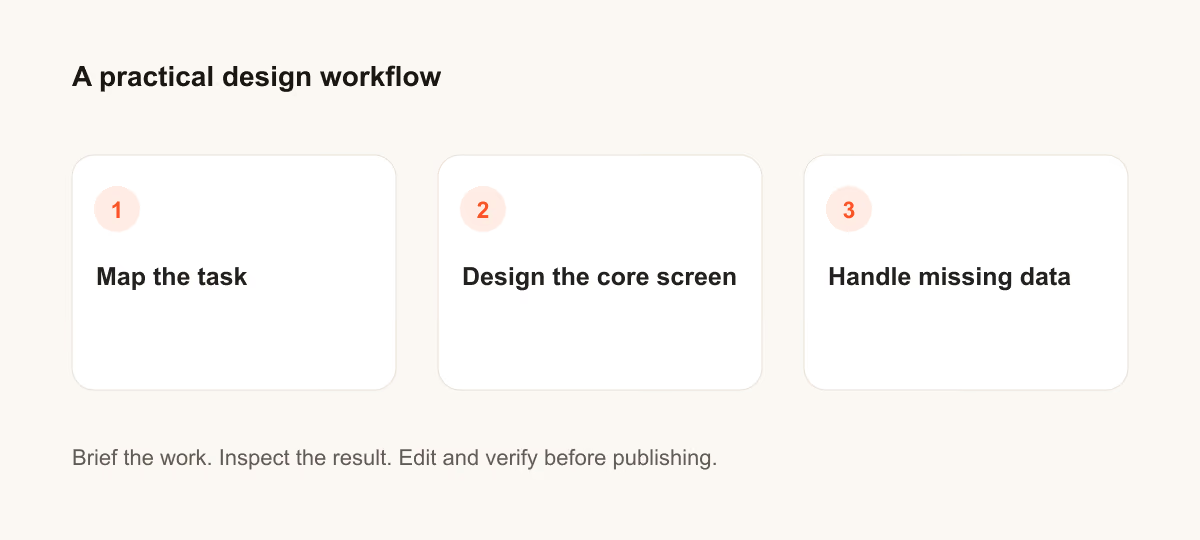
18. Um estado vazio
Design an empty state for a person who needs to finish one task quickly. State the audience and task you are assuming. Then use a clear hierarchy, realistic content lengths and one prominent primary action. Use realistic labels and content lengths, with no invented metrics or testimonials. Describe the information hierarchy, mobile adaptation and next action. Explain one tradeoff and how you would check it with users.Verificação: Verifique o layout no computador e num ecrã móvel com 360 píxeis de largura.
19. Um cabeçalho de perfil
Design a profile header for a person who needs to finish one task quickly. State the audience and task you are assuming. Then use a clear hierarchy, realistic content lengths and one prominent primary action. Use realistic labels and content lengths, with no invented metrics or testimonials. Describe the information hierarchy, mobile adaptation and next action. Explain one tradeoff and how you would check it with users.Verificação: Verifique o layout no computador e num ecrã móvel com 360 píxeis de largura.
20. Uma auditoria de tokens de design
Design a design token audit for a person who needs to finish one task quickly. State the audience and task you are assuming. Then use a clear hierarchy, realistic content lengths and one prominent primary action. Use realistic labels and content lengths, with no invented metrics or testimonials. Describe the information hierarchy, mobile adaptation and next action. Explain one tradeoff and how you would check it with users.Verificação: Verifique o layout no computador e num ecrã móvel com 360 píxeis de largura.
Prompts para tratar dados em falta
Para tratar dados em falta, identifique o utilizador e a decisão que o ecrã deve apoiar.
21. Um ecrã de pagamento móvel
Design a mobile checkout screen for a person who needs to finish one task quickly. State the audience and task you are assuming. Then include empty, loading and error states with recovery actions. Use realistic labels and content lengths, with no invented metrics or testimonials. Describe the information hierarchy, mobile adaptation and next action. Explain one tradeoff and how you would check it with users.Verificação: Confirme que o utilizador consegue recuperar sem perder o trabalho introduzido.
22. Um conjunto de variantes de componentes
Design a component variant set for a person who needs to finish one task quickly. State the audience and task you are assuming. Then include empty, loading and error states with recovery actions. Use realistic labels and content lengths, with no invented metrics or testimonials. Describe the information hierarchy, mobile adaptation and next action. Explain one tradeoff and how you would check it with users.Verificação: Confirme que o utilizador consegue recuperar sem perder o trabalho introduzido.
23. Um sistema de cartões para um painel
Design a dashboard card system for a person who needs to finish one task quickly. State the audience and task you are assuming. Then include empty, loading and error states with recovery actions. Use realistic labels and content lengths, with no invented metrics or testimonials. Describe the information hierarchy, mobile adaptation and next action. Explain one tradeoff and how you would check it with users.Verificação: Confirme que o utilizador consegue recuperar sem perder o trabalho introduzido.
24. Uma navegação de definições
Design a settings navigation for a person who needs to finish one task quickly. State the audience and task you are assuming. Then include empty, loading and error states with recovery actions. Use realistic labels and content lengths, with no invented metrics or testimonials. Describe the information hierarchy, mobile adaptation and next action. Explain one tradeoff and how you would check it with users.Verificação: Confirme que o utilizador consegue recuperar sem perder o trabalho introduzido.
25. Uma secção de preços responsiva
Design a responsive pricing section for a person who needs to finish one task quickly. State the audience and task you are assuming. Then include empty, loading and error states with recovery actions. Use realistic labels and content lengths, with no invented metrics or testimonials. Describe the information hierarchy, mobile adaptation and next action. Explain one tradeoff and how you would check it with users.Verificação: Confirme que o utilizador consegue recuperar sem perder o trabalho introduzido.
O que verificar antes de utilizar o resultado
Os ecrãs gerados são pontos de partida. Teste-os com conteúdo real, teclado, ecrãs pequenos e as pessoas que os vão utilizar. O acabamento visual não comprova a usabilidade.
Se o resultado não cumprir a tarefa, encurte o prompt e indique o facto ou a restrição em falta. Guarde a versão utilizada para que o recurso final ou a alteração de código possam ser reproduzidos.
Leituras adicionais
Continue com um guia relacionado
Ponha em prática
O seu próximo passo
Tem uma pergunta ou uma correção?
Contactar a Thrive