La versione breve
- Figma AI può aiutare nelle prime bozze e nelle modifiche ai frame selezionati. I prompt descrivono layout modificabili; verifica nel tuo spazio di lavoro quali funzioni sono disponibili.
- Le schermate generate sono un punto di partenza. Testale con contenuti reali, tastiera, schermi piccoli e persone che dovranno usarle. Una buona resa visiva non dimostra l'usabilità.
Figma AI può aiutare nelle prime bozze e nelle modifiche ai frame selezionati. I prompt descrivono layout modificabili; verifica nel tuo spazio di lavoro quali funzioni sono disponibili.
Le schermate generate sono un punto di partenza. Testale con contenuti reali, tastiera, schermi piccoli e persone che dovranno usarle. Una buona resa visiva non dimostra l'usabilità.
Come usare questa raccolta
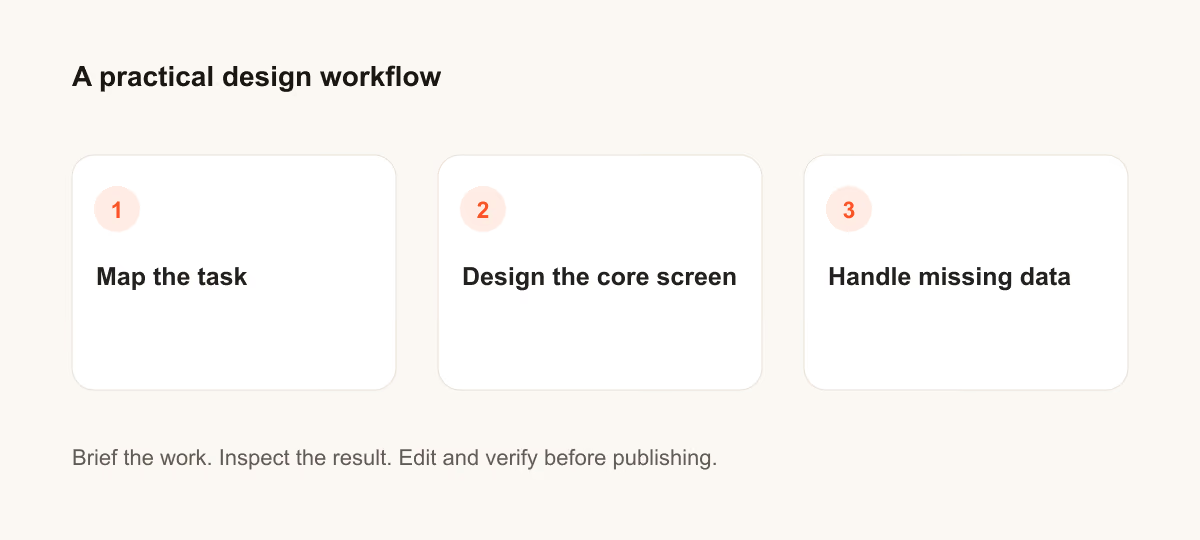
Scegli l'attività più vicina al tuo lavoro. Copia il prompt, sostituisci la scena generica o il contesto del codice con i tuoi dati e mantieni i vincoli utili a valutare il risultato. Modifica una variabile alla volta per capire cosa migliora.
Il metodo segue la guida a First Draft di Figma: fornisci un contesto preciso e controlla il risultato, senza dare per corretta una prima bozza ben presentata.
Prompt per descrivere l'attività
Per descrivere l'attività, indica l'utente e la decisione che la schermata deve aiutarlo a prendere.
1. Una schermata di pagamento su mobile
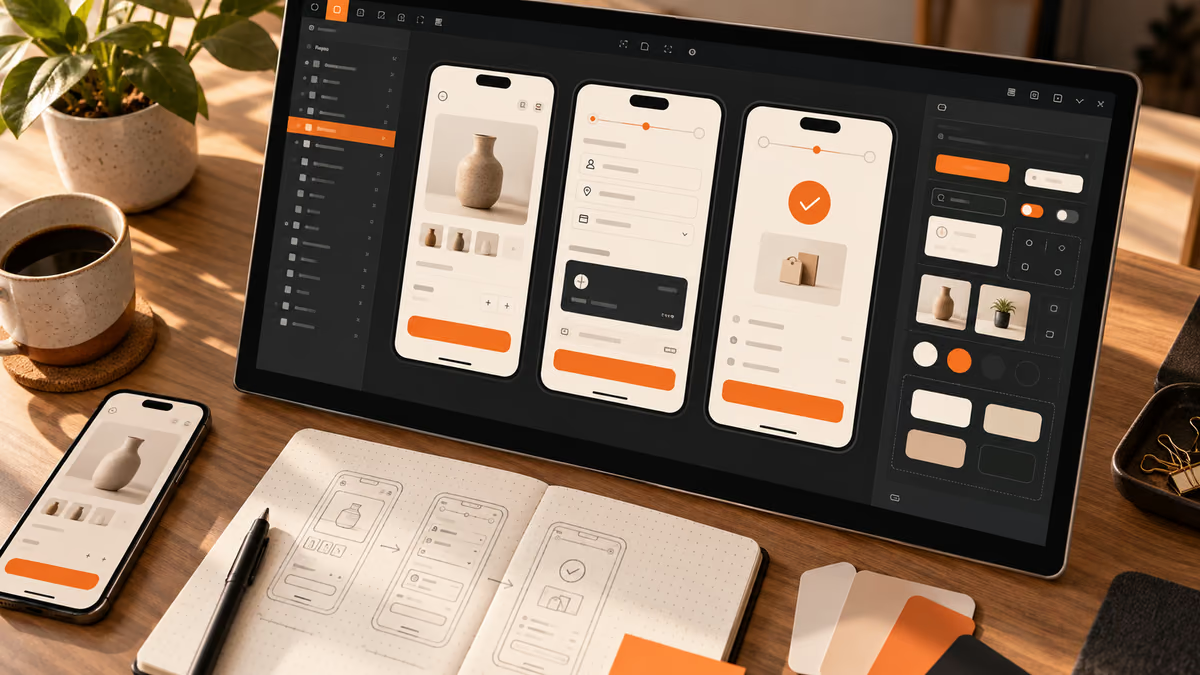
Design a mobile checkout screen for a person who needs to finish one task quickly. State the audience and task you are assuming. Then show the user goal, entry point, essential action and success state in a low-fidelity flow. Use realistic labels and content lengths, with no invented metrics or testimonials. Describe the information hierarchy, mobile adaptation and next action. Explain one tradeoff and how you would check it with users.Verifica: Un nuovo utente capisce quale azione compiere senza leggere un suggerimento?
2. Un insieme di varianti di un componente
Design a component variant set for a person who needs to finish one task quickly. State the audience and task you are assuming. Then show the user goal, entry point, essential action and success state in a low-fidelity flow. Use realistic labels and content lengths, with no invented metrics or testimonials. Describe the information hierarchy, mobile adaptation and next action. Explain one tradeoff and how you would check it with users.Verifica: Un nuovo utente capisce quale azione compiere senza leggere un suggerimento?
3. Un sistema di schede per dashboard
Design a dashboard card system for a person who needs to finish one task quickly. State the audience and task you are assuming. Then show the user goal, entry point, essential action and success state in a low-fidelity flow. Use realistic labels and content lengths, with no invented metrics or testimonials. Describe the information hierarchy, mobile adaptation and next action. Explain one tradeoff and how you would check it with users.Verifica: Un nuovo utente capisce quale azione compiere senza leggere un suggerimento?
4. Una navigazione per le impostazioni
Design a settings navigation for a person who needs to finish one task quickly. State the audience and task you are assuming. Then show the user goal, entry point, essential action and success state in a low-fidelity flow. Use realistic labels and content lengths, with no invented metrics or testimonials. Describe the information hierarchy, mobile adaptation and next action. Explain one tradeoff and how you would check it with users.Verifica: Un nuovo utente capisce quale azione compiere senza leggere un suggerimento?
5. Una sezione prezzi responsive
Design a responsive pricing section for a person who needs to finish one task quickly. State the audience and task you are assuming. Then show the user goal, entry point, essential action and success state in a low-fidelity flow. Use realistic labels and content lengths, with no invented metrics or testimonials. Describe the information hierarchy, mobile adaptation and next action. Explain one tradeoff and how you would check it with users.Verifica: Un nuovo utente capisce quale azione compiere senza leggere un suggerimento?
6. Un modulo di onboarding
Design an onboarding form for a person who needs to finish one task quickly. State the audience and task you are assuming. Then show the user goal, entry point, essential action and success state in a low-fidelity flow. Use realistic labels and content lengths, with no invented metrics or testimonials. Describe the information hierarchy, mobile adaptation and next action. Explain one tradeoff and how you would check it with users.Verifica: Un nuovo utente capisce quale azione compiere senza leggere un suggerimento?
7. Un pannello di filtri di ricerca
Design a search filter panel for a person who needs to finish one task quickly. State the audience and task you are assuming. Then show the user goal, entry point, essential action and success state in a low-fidelity flow. Use realistic labels and content lengths, with no invented metrics or testimonials. Describe the information hierarchy, mobile adaptation and next action. Explain one tradeoff and how you would check it with users.Verifica: Un nuovo utente capisce quale azione compiere senza leggere un suggerimento?
8. Uno stato vuoto
Design an empty state for a person who needs to finish one task quickly. State the audience and task you are assuming. Then show the user goal, entry point, essential action and success state in a low-fidelity flow. Use realistic labels and content lengths, with no invented metrics or testimonials. Describe the information hierarchy, mobile adaptation and next action. Explain one tradeoff and how you would check it with users.Verifica: Un nuovo utente capisce quale azione compiere senza leggere un suggerimento?
9. L'intestazione di un profilo
Design a profile header for a person who needs to finish one task quickly. State the audience and task you are assuming. Then show the user goal, entry point, essential action and success state in a low-fidelity flow. Use realistic labels and content lengths, with no invented metrics or testimonials. Describe the information hierarchy, mobile adaptation and next action. Explain one tradeoff and how you would check it with users.Verifica: Un nuovo utente capisce quale azione compiere senza leggere un suggerimento?
10. Una verifica dei design token
Design a design token audit for a person who needs to finish one task quickly. State the audience and task you are assuming. Then show the user goal, entry point, essential action and success state in a low-fidelity flow. Use realistic labels and content lengths, with no invented metrics or testimonials. Describe the information hierarchy, mobile adaptation and next action. Explain one tradeoff and how you would check it with users.Verifica: Un nuovo utente capisce quale azione compiere senza leggere un suggerimento?
Prompt per progettare la schermata principale
Per progettare la schermata principale, indica l'utente e la decisione che la schermata deve aiutarlo a prendere.
11. Una schermata di pagamento su mobile
Design a mobile checkout screen for a person who needs to finish one task quickly. State the audience and task you are assuming. Then use a clear hierarchy, realistic content lengths and one prominent primary action. Use realistic labels and content lengths, with no invented metrics or testimonials. Describe the information hierarchy, mobile adaptation and next action. Explain one tradeoff and how you would check it with users.Verifica: Controlla il layout su desktop e su uno schermo mobile largo 360 pixel.
12. Un insieme di varianti di un componente
Design a component variant set for a person who needs to finish one task quickly. State the audience and task you are assuming. Then use a clear hierarchy, realistic content lengths and one prominent primary action. Use realistic labels and content lengths, with no invented metrics or testimonials. Describe the information hierarchy, mobile adaptation and next action. Explain one tradeoff and how you would check it with users.Verifica: Controlla il layout su desktop e su uno schermo mobile largo 360 pixel.
13. Un sistema di schede per dashboard
Design a dashboard card system for a person who needs to finish one task quickly. State the audience and task you are assuming. Then use a clear hierarchy, realistic content lengths and one prominent primary action. Use realistic labels and content lengths, with no invented metrics or testimonials. Describe the information hierarchy, mobile adaptation and next action. Explain one tradeoff and how you would check it with users.Verifica: Controlla il layout su desktop e su uno schermo mobile largo 360 pixel.
14. Una navigazione per le impostazioni
Design a settings navigation for a person who needs to finish one task quickly. State the audience and task you are assuming. Then use a clear hierarchy, realistic content lengths and one prominent primary action. Use realistic labels and content lengths, with no invented metrics or testimonials. Describe the information hierarchy, mobile adaptation and next action. Explain one tradeoff and how you would check it with users.Verifica: Controlla il layout su desktop e su uno schermo mobile largo 360 pixel.
15. Una sezione prezzi responsive
Design a responsive pricing section for a person who needs to finish one task quickly. State the audience and task you are assuming. Then use a clear hierarchy, realistic content lengths and one prominent primary action. Use realistic labels and content lengths, with no invented metrics or testimonials. Describe the information hierarchy, mobile adaptation and next action. Explain one tradeoff and how you would check it with users.Verifica: Controlla il layout su desktop e su uno schermo mobile largo 360 pixel.
16. Un modulo di onboarding
Design an onboarding form for a person who needs to finish one task quickly. State the audience and task you are assuming. Then use a clear hierarchy, realistic content lengths and one prominent primary action. Use realistic labels and content lengths, with no invented metrics or testimonials. Describe the information hierarchy, mobile adaptation and next action. Explain one tradeoff and how you would check it with users.Verifica: Controlla il layout su desktop e su uno schermo mobile largo 360 pixel.
17. Un pannello di filtri di ricerca
Design a search filter panel for a person who needs to finish one task quickly. State the audience and task you are assuming. Then use a clear hierarchy, realistic content lengths and one prominent primary action. Use realistic labels and content lengths, with no invented metrics or testimonials. Describe the information hierarchy, mobile adaptation and next action. Explain one tradeoff and how you would check it with users.Verifica: Controlla il layout su desktop e su uno schermo mobile largo 360 pixel.
18. Uno stato vuoto
Design an empty state for a person who needs to finish one task quickly. State the audience and task you are assuming. Then use a clear hierarchy, realistic content lengths and one prominent primary action. Use realistic labels and content lengths, with no invented metrics or testimonials. Describe the information hierarchy, mobile adaptation and next action. Explain one tradeoff and how you would check it with users.Verifica: Controlla il layout su desktop e su uno schermo mobile largo 360 pixel.
19. L'intestazione di un profilo
Design a profile header for a person who needs to finish one task quickly. State the audience and task you are assuming. Then use a clear hierarchy, realistic content lengths and one prominent primary action. Use realistic labels and content lengths, with no invented metrics or testimonials. Describe the information hierarchy, mobile adaptation and next action. Explain one tradeoff and how you would check it with users.Verifica: Controlla il layout su desktop e su uno schermo mobile largo 360 pixel.
20. Una verifica dei design token
Design a design token audit for a person who needs to finish one task quickly. State the audience and task you are assuming. Then use a clear hierarchy, realistic content lengths and one prominent primary action. Use realistic labels and content lengths, with no invented metrics or testimonials. Describe the information hierarchy, mobile adaptation and next action. Explain one tradeoff and how you would check it with users.Verifica: Controlla il layout su desktop e su uno schermo mobile largo 360 pixel.
Prompt per gestire i dati mancanti
Per gestire i dati mancanti, indica l'utente e la decisione che la schermata deve aiutarlo a prendere.
21. Una schermata di pagamento su mobile
Design a mobile checkout screen for a person who needs to finish one task quickly. State the audience and task you are assuming. Then include empty, loading and error states with recovery actions. Use realistic labels and content lengths, with no invented metrics or testimonials. Describe the information hierarchy, mobile adaptation and next action. Explain one tradeoff and how you would check it with users.Verifica: Verifica che l'utente possa riprendere l'attività senza perdere i dati inseriti.
22. Un insieme di varianti di un componente
Design a component variant set for a person who needs to finish one task quickly. State the audience and task you are assuming. Then include empty, loading and error states with recovery actions. Use realistic labels and content lengths, with no invented metrics or testimonials. Describe the information hierarchy, mobile adaptation and next action. Explain one tradeoff and how you would check it with users.Verifica: Verifica che l'utente possa riprendere l'attività senza perdere i dati inseriti.
23. Un sistema di schede per dashboard
Design a dashboard card system for a person who needs to finish one task quickly. State the audience and task you are assuming. Then include empty, loading and error states with recovery actions. Use realistic labels and content lengths, with no invented metrics or testimonials. Describe the information hierarchy, mobile adaptation and next action. Explain one tradeoff and how you would check it with users.Verifica: Verifica che l'utente possa riprendere l'attività senza perdere i dati inseriti.
24. Una navigazione per le impostazioni
Design a settings navigation for a person who needs to finish one task quickly. State the audience and task you are assuming. Then include empty, loading and error states with recovery actions. Use realistic labels and content lengths, with no invented metrics or testimonials. Describe the information hierarchy, mobile adaptation and next action. Explain one tradeoff and how you would check it with users.Verifica: Verifica che l'utente possa riprendere l'attività senza perdere i dati inseriti.
25. Una sezione prezzi responsive
Design a responsive pricing section for a person who needs to finish one task quickly. State the audience and task you are assuming. Then include empty, loading and error states with recovery actions. Use realistic labels and content lengths, with no invented metrics or testimonials. Describe the information hierarchy, mobile adaptation and next action. Explain one tradeoff and how you would check it with users.Verifica: Verifica che l'utente possa riprendere l'attività senza perdere i dati inseriti.
Cosa verificare prima di usare il risultato
Le schermate generate sono un punto di partenza. Testale con contenuti reali, tastiera, schermi piccoli e persone che dovranno usarle. Una buona resa visiva non dimostra l'usabilità.
Se il risultato non risponde al compito, accorcia il prompt e precisa il fatto o il vincolo mancante. Conserva la versione usata per poter riprodurre il contenuto finale o la modifica al codice.
Approfondimenti
Continua con una guida correlata
Mettilo in pratica
Il prossimo passo
Hai una domanda o una correzione?
Contatta Thrive