The short version
- A landing page has one job: help a visitor understand an offer and choose a next step. These prompts specify audience, proof and responsive structure before visual polish.
- Generated screens are starting points. Test them with actual content, keyboard input, small screens and the people who need to use them. Do not treat visual polish as proof of usability.
A landing page has one job: help a visitor understand an offer and choose a next step. These prompts specify audience, proof and responsive structure before visual polish.
Generated screens are starting points. Test them with actual content, keyboard input, small screens and the people who need to use them. Do not treat visual polish as proof of usability.
How to use this collection
Pick the task closest to your work. Copy the prompt, replace the generic scene or code context with your own facts, and keep the constraints that help you judge the result. Change one variable at a time so you can tell what improved.
The approach follows the Figma First Draft guide: provide concrete context and inspect the output rather than assuming a polished first pass is correct.
Map the task prompts
For map the task, name the user and the decision the screen needs to support.
1. A developer API launch
Design a developer API launch for a person who needs to finish one task quickly. State the audience and task you are assuming. Then show the user goal, entry point, essential action and success state in a low-fidelity flow. Use realistic labels and content lengths, with no invented metrics or testimonials. Describe the information hierarchy, mobile adaptation and next action. Explain one tradeoff and how you would check it with users.Review: Can a new user name the next action without reading a tooltip?
2. A language-learning app
Design a language-learning app for a person who needs to finish one task quickly. State the audience and task you are assuming. Then show the user goal, entry point, essential action and success state in a low-fidelity flow. Use realistic labels and content lengths, with no invented metrics or testimonials. Describe the information hierarchy, mobile adaptation and next action. Explain one tradeoff and how you would check it with users.Review: Can a new user name the next action without reading a tooltip?
3. A local bike repair service
Design a local bike repair service for a person who needs to finish one task quickly. State the audience and task you are assuming. Then show the user goal, entry point, essential action and success state in a low-fidelity flow. Use realistic labels and content lengths, with no invented metrics or testimonials. Describe the information hierarchy, mobile adaptation and next action. Explain one tradeoff and how you would check it with users.Review: Can a new user name the next action without reading a tooltip?
4. A newsletter signup
Design a newsletter signup for a person who needs to finish one task quickly. State the audience and task you are assuming. Then show the user goal, entry point, essential action and success state in a low-fidelity flow. Use realistic labels and content lengths, with no invented metrics or testimonials. Describe the information hierarchy, mobile adaptation and next action. Explain one tradeoff and how you would check it with users.Review: Can a new user name the next action without reading a tooltip?
5. A nonprofit donation page
Design a nonprofit donation page for a person who needs to finish one task quickly. State the audience and task you are assuming. Then show the user goal, entry point, essential action and success state in a low-fidelity flow. Use realistic labels and content lengths, with no invented metrics or testimonials. Describe the information hierarchy, mobile adaptation and next action. Explain one tradeoff and how you would check it with users.Review: Can a new user name the next action without reading a tooltip?
6. A productivity template
Design a productivity template for a person who needs to finish one task quickly. State the audience and task you are assuming. Then show the user goal, entry point, essential action and success state in a low-fidelity flow. Use realistic labels and content lengths, with no invented metrics or testimonials. Describe the information hierarchy, mobile adaptation and next action. Explain one tradeoff and how you would check it with users.Review: Can a new user name the next action without reading a tooltip?
7. A course waitlist
Design a course waitlist for a person who needs to finish one task quickly. State the audience and task you are assuming. Then show the user goal, entry point, essential action and success state in a low-fidelity flow. Use realistic labels and content lengths, with no invented metrics or testimonials. Describe the information hierarchy, mobile adaptation and next action. Explain one tradeoff and how you would check it with users.Review: Can a new user name the next action without reading a tooltip?
8. A creative portfolio
Design a creative portfolio for a person who needs to finish one task quickly. State the audience and task you are assuming. Then show the user goal, entry point, essential action and success state in a low-fidelity flow. Use realistic labels and content lengths, with no invented metrics or testimonials. Describe the information hierarchy, mobile adaptation and next action. Explain one tradeoff and how you would check it with users.Review: Can a new user name the next action without reading a tooltip?
9. A neighborhood cafe
Design a neighborhood cafe for a person who needs to finish one task quickly. State the audience and task you are assuming. Then show the user goal, entry point, essential action and success state in a low-fidelity flow. Use realistic labels and content lengths, with no invented metrics or testimonials. Describe the information hierarchy, mobile adaptation and next action. Explain one tradeoff and how you would check it with users.Review: Can a new user name the next action without reading a tooltip?
10. A B2B analytics product
Design a B2B analytics product for a person who needs to finish one task quickly. State the audience and task you are assuming. Then show the user goal, entry point, essential action and success state in a low-fidelity flow. Use realistic labels and content lengths, with no invented metrics or testimonials. Describe the information hierarchy, mobile adaptation and next action. Explain one tradeoff and how you would check it with users.Review: Can a new user name the next action without reading a tooltip?

Design the core screen prompts
For design the core screen, name the user and the decision the screen needs to support.
11. A developer API launch
Design a developer API launch for a person who needs to finish one task quickly. State the audience and task you are assuming. Then use a clear hierarchy, realistic content lengths and one prominent primary action. Use realistic labels and content lengths, with no invented metrics or testimonials. Describe the information hierarchy, mobile adaptation and next action. Explain one tradeoff and how you would check it with users.Review: Check layout at desktop and 360-pixel mobile widths.
12. A language-learning app
Design a language-learning app for a person who needs to finish one task quickly. State the audience and task you are assuming. Then use a clear hierarchy, realistic content lengths and one prominent primary action. Use realistic labels and content lengths, with no invented metrics or testimonials. Describe the information hierarchy, mobile adaptation and next action. Explain one tradeoff and how you would check it with users.Review: Check layout at desktop and 360-pixel mobile widths.
13. A local bike repair service
Design a local bike repair service for a person who needs to finish one task quickly. State the audience and task you are assuming. Then use a clear hierarchy, realistic content lengths and one prominent primary action. Use realistic labels and content lengths, with no invented metrics or testimonials. Describe the information hierarchy, mobile adaptation and next action. Explain one tradeoff and how you would check it with users.Review: Check layout at desktop and 360-pixel mobile widths.
14. A newsletter signup
Design a newsletter signup for a person who needs to finish one task quickly. State the audience and task you are assuming. Then use a clear hierarchy, realistic content lengths and one prominent primary action. Use realistic labels and content lengths, with no invented metrics or testimonials. Describe the information hierarchy, mobile adaptation and next action. Explain one tradeoff and how you would check it with users.Review: Check layout at desktop and 360-pixel mobile widths.
15. A nonprofit donation page
Design a nonprofit donation page for a person who needs to finish one task quickly. State the audience and task you are assuming. Then use a clear hierarchy, realistic content lengths and one prominent primary action. Use realistic labels and content lengths, with no invented metrics or testimonials. Describe the information hierarchy, mobile adaptation and next action. Explain one tradeoff and how you would check it with users.Review: Check layout at desktop and 360-pixel mobile widths.
16. A productivity template
Design a productivity template for a person who needs to finish one task quickly. State the audience and task you are assuming. Then use a clear hierarchy, realistic content lengths and one prominent primary action. Use realistic labels and content lengths, with no invented metrics or testimonials. Describe the information hierarchy, mobile adaptation and next action. Explain one tradeoff and how you would check it with users.Review: Check layout at desktop and 360-pixel mobile widths.
17. A course waitlist
Design a course waitlist for a person who needs to finish one task quickly. State the audience and task you are assuming. Then use a clear hierarchy, realistic content lengths and one prominent primary action. Use realistic labels and content lengths, with no invented metrics or testimonials. Describe the information hierarchy, mobile adaptation and next action. Explain one tradeoff and how you would check it with users.Review: Check layout at desktop and 360-pixel mobile widths.
18. A creative portfolio
Design a creative portfolio for a person who needs to finish one task quickly. State the audience and task you are assuming. Then use a clear hierarchy, realistic content lengths and one prominent primary action. Use realistic labels and content lengths, with no invented metrics or testimonials. Describe the information hierarchy, mobile adaptation and next action. Explain one tradeoff and how you would check it with users.Review: Check layout at desktop and 360-pixel mobile widths.
19. A neighborhood cafe
Design a neighborhood cafe for a person who needs to finish one task quickly. State the audience and task you are assuming. Then use a clear hierarchy, realistic content lengths and one prominent primary action. Use realistic labels and content lengths, with no invented metrics or testimonials. Describe the information hierarchy, mobile adaptation and next action. Explain one tradeoff and how you would check it with users.Review: Check layout at desktop and 360-pixel mobile widths.
20. A B2B analytics product
Design a B2B analytics product for a person who needs to finish one task quickly. State the audience and task you are assuming. Then use a clear hierarchy, realistic content lengths and one prominent primary action. Use realistic labels and content lengths, with no invented metrics or testimonials. Describe the information hierarchy, mobile adaptation and next action. Explain one tradeoff and how you would check it with users.Review: Check layout at desktop and 360-pixel mobile widths.
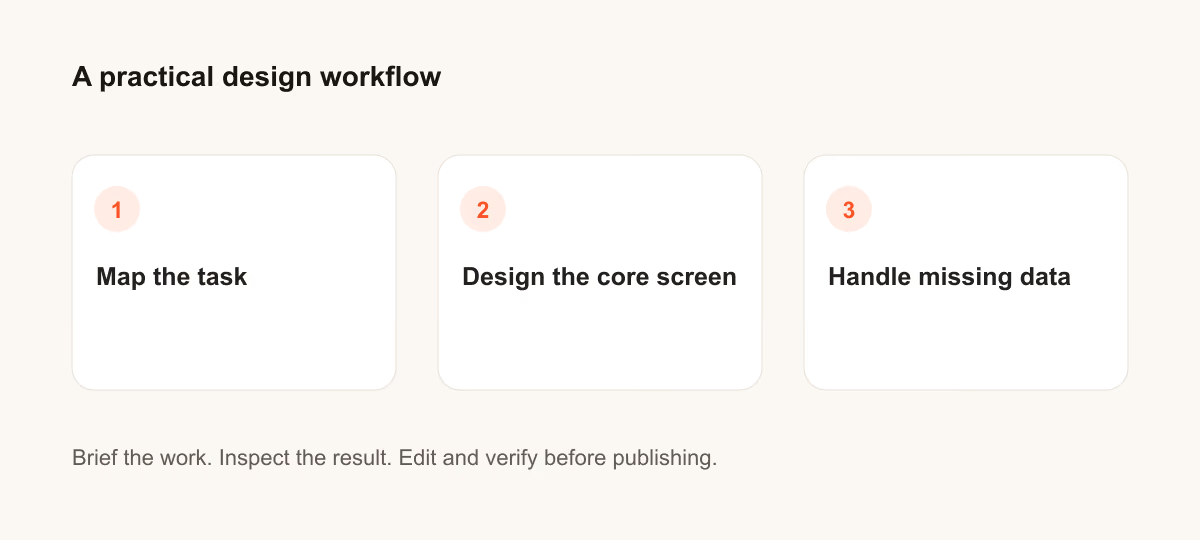
Handle missing data prompts
For handle missing data, name the user and the decision the screen needs to support.
21. A developer API launch
Design a developer API launch for a person who needs to finish one task quickly. State the audience and task you are assuming. Then include empty, loading and error states with recovery actions. Use realistic labels and content lengths, with no invented metrics or testimonials. Describe the information hierarchy, mobile adaptation and next action. Explain one tradeoff and how you would check it with users.Review: Check whether the user can recover without losing entered work.
22. A language-learning app
Design a language-learning app for a person who needs to finish one task quickly. State the audience and task you are assuming. Then include empty, loading and error states with recovery actions. Use realistic labels and content lengths, with no invented metrics or testimonials. Describe the information hierarchy, mobile adaptation and next action. Explain one tradeoff and how you would check it with users.Review: Check whether the user can recover without losing entered work.
23. A local bike repair service
Design a local bike repair service for a person who needs to finish one task quickly. State the audience and task you are assuming. Then include empty, loading and error states with recovery actions. Use realistic labels and content lengths, with no invented metrics or testimonials. Describe the information hierarchy, mobile adaptation and next action. Explain one tradeoff and how you would check it with users.Review: Check whether the user can recover without losing entered work.
24. A newsletter signup
Design a newsletter signup for a person who needs to finish one task quickly. State the audience and task you are assuming. Then include empty, loading and error states with recovery actions. Use realistic labels and content lengths, with no invented metrics or testimonials. Describe the information hierarchy, mobile adaptation and next action. Explain one tradeoff and how you would check it with users.Review: Check whether the user can recover without losing entered work.
25. A nonprofit donation page
Design a nonprofit donation page for a person who needs to finish one task quickly. State the audience and task you are assuming. Then include empty, loading and error states with recovery actions. Use realistic labels and content lengths, with no invented metrics or testimonials. Describe the information hierarchy, mobile adaptation and next action. Explain one tradeoff and how you would check it with users.Review: Check whether the user can recover without losing entered work.
26. A productivity template
Design a productivity template for a person who needs to finish one task quickly. State the audience and task you are assuming. Then include empty, loading and error states with recovery actions. Use realistic labels and content lengths, with no invented metrics or testimonials. Describe the information hierarchy, mobile adaptation and next action. Explain one tradeoff and how you would check it with users.Review: Check whether the user can recover without losing entered work.
27. A course waitlist
Design a course waitlist for a person who needs to finish one task quickly. State the audience and task you are assuming. Then include empty, loading and error states with recovery actions. Use realistic labels and content lengths, with no invented metrics or testimonials. Describe the information hierarchy, mobile adaptation and next action. Explain one tradeoff and how you would check it with users.Review: Check whether the user can recover without losing entered work.
28. A creative portfolio
Design a creative portfolio for a person who needs to finish one task quickly. State the audience and task you are assuming. Then include empty, loading and error states with recovery actions. Use realistic labels and content lengths, with no invented metrics or testimonials. Describe the information hierarchy, mobile adaptation and next action. Explain one tradeoff and how you would check it with users.Review: Check whether the user can recover without losing entered work.
29. A neighborhood cafe
Design a neighborhood cafe for a person who needs to finish one task quickly. State the audience and task you are assuming. Then include empty, loading and error states with recovery actions. Use realistic labels and content lengths, with no invented metrics or testimonials. Describe the information hierarchy, mobile adaptation and next action. Explain one tradeoff and how you would check it with users.Review: Check whether the user can recover without losing entered work.
30. A B2B analytics product
Design a B2B analytics product for a person who needs to finish one task quickly. State the audience and task you are assuming. Then include empty, loading and error states with recovery actions. Use realistic labels and content lengths, with no invented metrics or testimonials. Describe the information hierarchy, mobile adaptation and next action. Explain one tradeoff and how you would check it with users.Review: Check whether the user can recover without losing entered work.
What to check before you use the result
Generated screens are starting points. Test them with actual content, keyboard input, small screens and the people who need to use them. Do not treat visual polish as proof of usability.
If the output misses the task, shorten the prompt and specify the missing fact or constraint. Keep a record of the version you used so the final asset or code change can be reproduced.
Further reading
Continue with a related guide
Put it into practice
Your next step
Have a question or a correction?
Contact Thrive